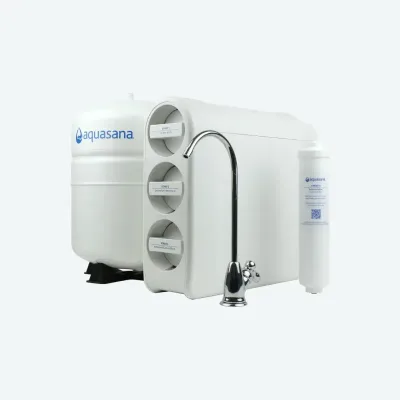
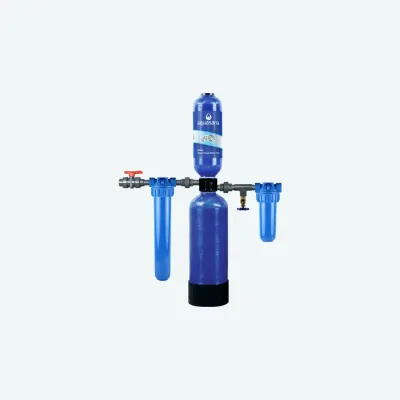
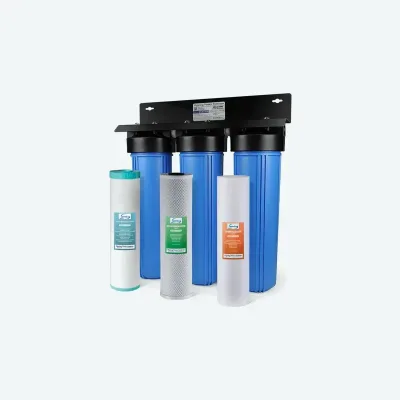
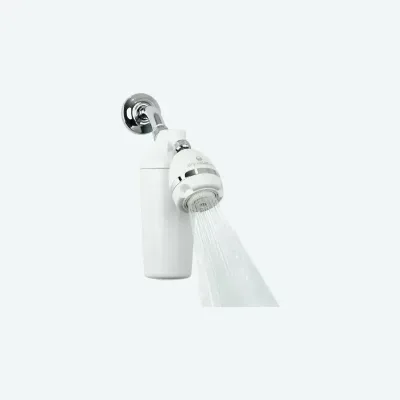

Do you need a water treatment company at all?
Plenty of households don't. On city water, your utility publishes a Consumer Confidence Report every year. It lists what was detected against EPA limits. CDC explains how to read one, EPA links to local reports, and our water quality pages pull federal data for large US cities. The Minnesota Department of Health puts it plainly for its own residents: “Most Minnesotans do not need to install home drinking water treatment to protect their health.”
Whether you need a company comes down to where the treatment goes. The University of Nebraska–Lincoln NebGuide G1488 (revised September 2025) splits systems into two groups. Point-of-entry (POE) systems treat all water as it comes into the house. Iron, manganese, hardness and odor usually call for one, and so do bacteria and some organic compounds, since you're exposed in the shower too. Point-of-use (POU) systems treat one tap. Nitrate is only a concern if you drink it, so a single-tap system can be enough.
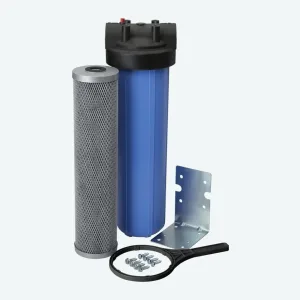
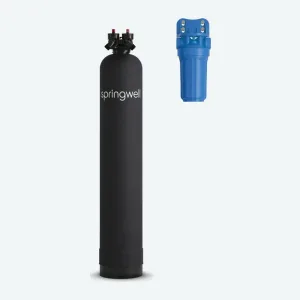
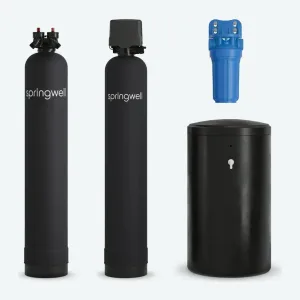
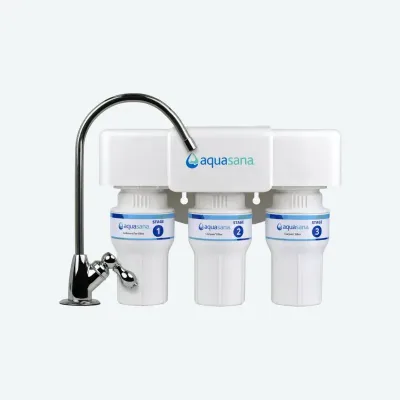
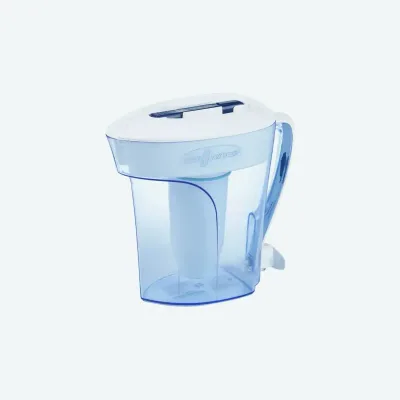
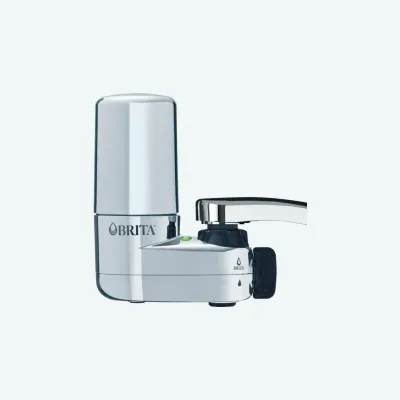
A pitcher or an under-sink filter you can fit yourself (see our water filter guides). A whole-house filter or a softener goes on the main line, which means plumbing work. That's when you're choosing a company.
Test your water before any sales visit
Many dealers offer a free water test. It answers a narrower question than the pitch suggests. UNL notes that these tests usually cover hardness, pH, iron, manganese, sulfur and total dissolved solids, sometimes nitrate, and rarely pesticides or solvents. They can guide a choice for nuisance problems. They can't tell you whether the water is safe to drink, and UNL advises a second test from a certified lab even for nuisance problems.
| Dealer's free test | Certified lab test | |
|---|---|---|
| What it covers | Hardness, pH, iron, manganese, sulfur, TDS, sometimes nitrate | Whatever you order, and nothing else |
| Tells you about health risks | No, per UNL | Yes, for the substances tested |
| Who runs it | The company that wants to sell you equipment | A lab with no stake in the sale |
| Cost | Free | Set by the lab. Mail-in kits below: $55 to $399 |
Penn State Extension is direct about it: “Be cautious of water test results from any uncertified lab or from water treatment salespeople.” For a lab, EPA points you to your state certification program, which lists certified labs. EPA itself doesn't test home water on request. On a private well, CDC advises a state-certified lab too, and your health department can share the list. UNL calls a yearly test for bacteria and nitrate the minimum for a private supply.
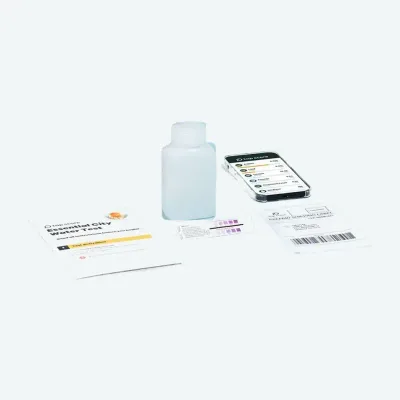
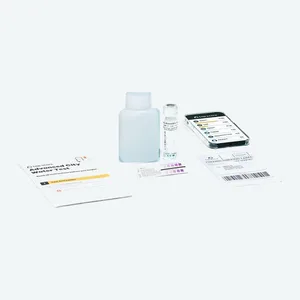
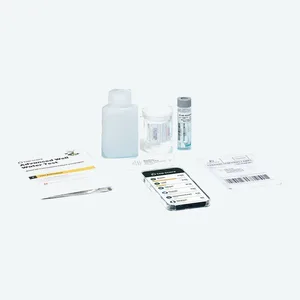
Mail-in kits are the other route. Tap Score sends samples to a lab the brand describes as accredited, so if you need state-certified results, ask the lab directly. Compare all kits in our water test kit guide.
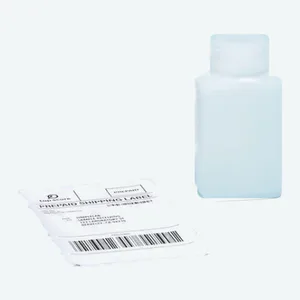
With a report in hand, a dealer has to sell against your numbers. This guide is general information, not medical or legal advice (see our health disclaimer).
Finding a water filter company near you: the checklist
On October 14, 2026, a Google search for “water filter company” showed a Yelp directory and three local dealers on a map. However you find a company, even through “water filtration near me,” run it through these checks before it quotes.
- License for the install. Rules differ by state and city. Ask which license or permit the job needs where you live and whose name it's under. Then look the number up on the issuing agency's website.
- WQA certification of the people. The Water Quality Association certifies individuals, not just products. Its titles include Certified Water Specialist (CWS) for those who size and sell systems for problem water, Certified Installer (CI), and Certified Service Technician (CST). Each needs at least six months of field experience and an exam. Certification is voluntary and must be renewed every three years, so check the name in WQA's directory.
- A listing for the equipment. EPA does not test or approve treatment devices, and an EPA registration number on a filter isn't an approval, UNL notes. What counts is certification to NSF/ANSI standards by an accredited body such as NSF, WQA, IAPMO, UL or CSA. Look the exact model up in the NSF listings or WQA's product directory and confirm it covers the substances from your test. How we read listings is on our research page.
- A written test result. If the company tests your water, ask for the printed report with the lab's name and the units, not a verbal summary.
- An itemized quote. One total price hides the parts you'll pay for later. The next section lists what each line should show.
- A second quote. UNL advises checking with at least two dealers to compare treatment, equipment, costs, warranties and service.
- Past customers. UNL also suggests checking with others who have used the equipment. Ask for local references with the same system.
The same list works for reverse osmosis companies and softener dealers. An RO unit for one sink may not need an installer at all. Our reverse osmosis guide lists the certified models we track.
What a written quote should list
UNL's key factors include every cost: purchase, installation, operation, maintenance and retesting. A quote that lists each one can be compared line by line.
| Line on the quote | What to ask for |
|---|---|
| Equipment | Brand and model number of every tank and cartridge, plus the certification listing for your substances |
| Installation | Labor, plumbing parts, bypass valve, drain line, and any permit |
| Capacity | Rated flow in gallons per minute and capacity in gallons. UNL puts home use at 60 to 80 gallons per person per day, so 240 to 320 for a family of four |
| Filters and media | Price of each replacement and how often it's due, as a yearly total |
| Service | What a visit includes, its price, and which tasks you can do yourself |
| Retest | A lab test after install for the substance you're treating, and who pays for it |
| Warranty | Which parts are covered or excluded, and the conditions, such as water that shortens the system's life |
The 10 whole-house systems in our database list at $258 to $4,198 before installation (checked October 13, 2026 to October 15, 2026). Our whole-house filter cost calculator adds filters and years of upkeep. If a quote lands far above the brand's own price for the same model, ask what the difference pays for. Dealer networks rarely publish prices; the Culligan dealer quotes owners posted show how wide the range runs. Compare models in our whole-house filter guide.
Red flags during a sales visit
The Minnesota Department of Health lists the tactics it sees from some treatment companies, with advice next to each. They apply in any state.
| The salesperson… | What MDH advises |
|---|---|
| Says they work with your city or the state health department | Ask for the name of a contact at that agency and follow up with that person |
| Recites contamination cases from around the state | Ask your water supplier or state for data on your own water |
| Runs “tests” that change color or form solids | These may only show natural minerals. UNL calls such demonstrations generally meaningless for measuring how much of a contaminant is present |
| Says water should contain no contaminants at all | “No water supply is ever completely free of contaminants” |
| Says your water exceeds federal limits | Check your Consumer Confidence Report. MDH says nearly all Minnesota community systems meet EPA limits |
| Offers a one-time discount | Get estimates from other water treatment companies |
| Says the system needs no maintenance | All water treatment units need maintenance to work properly |
UNL adds two more: understating upkeep so the system looks cheaper, and selling a maintenance contract for work you could easily do yourself. A company that expects to stay in business, UNL writes, won't mind you taking time to decide. Get every claim and promise in writing.
Rent, lease or buy?
UNL sees renting as a fair option in two cases. The first is a short-term problem, such as a spill near your water source. The second is learning what a system's upkeep costs before you buy. Before renting, ask who handles maintenance, whether rental fees count toward buying the unit, and how long the agreement runs.
If you'd rather not change filters or add salt yourself, UNL says a service agreement can be worth it, especially when the system treats a health-related contaminant. Poor upkeep can let it back into your water. Price the agreement as its own line on the quote.
Signed at home? You have three business days to cancel
Under the FTC's Cooling-Off Rule, a sale made at your home can be canceled for a full refund until midnight of the third business day after you sign. It covers sales of $25 or more at home and $130 or more at a seller's temporary location, such as a home show booth. It applies even if you invited the salesperson, and the rule text in 16 CFR 429 covers leases and rentals as well as sales.
- Counting days. Saturday counts as a business day. Sundays and federal holidays don't. Sign on a Monday in a week with no holiday and you have until midnight Thursday.
- What the seller owes you. The seller must tell you about the right to cancel at the time of sale and give you two copies of a cancellation form. The contract has to be in the language used in the sales pitch.
- How to cancel. Mail one signed copy, postmarked before the deadline. The FTC suggests certified mail. You don't need a reason.
- After you cancel. The seller has 10 business days to refund you. If they don't collect the equipment within 20 days, you may keep it.
Two cases fall outside the rule. A sale completed at the seller's permanent store isn't covered. Nor is a visit you requested to repair or service equipment you already own, though anything extra sold on that visit is covered. For complaints about misleading claims, UNL lists the FTC at (877) 382-4357 and your state attorney general.
After installation: retest
UNL's advice doesn't end at install. Test a sample from the treated tap for your target substance at an accredited lab, then retest periodically. Ask whether the system has a performance indication device that warns before the filter or media runs out. UNL also suggests favoring manufacturers that retest at no extra cost after a few months of use.
Questions people ask
Is a free water test from a dealer worth it?
It can point to nuisance problems like hardness or iron. It won't show whether the water is safe to drink, since dealer tests rarely cover pesticides or solvents. UNL advises confirming even nuisance results with a certified lab before you buy.
Which water filtration company is best?
There isn't one best company for every home. The right one is licensed where you live, has WQA-certified staff, and quotes equipment whose certification listing covers what your test found. Compare at least two itemized quotes on the same water report.
How much does a whole house water filtration system cost?
The 10 whole-house systems in our database list at $258 to $4,198 before installation (checked October 13, 2026 to October 15, 2026). Installation, filters and service come on top.
Can I cancel a water softener contract signed at home?
Usually, yes. The FTC's Cooling-Off Rule lets you cancel a home sale of $25 or more until midnight of the third business day after signing, for a full refund. Sales finished at the seller's store and repair visits you requested aren't covered.
Ready to pick one?
I compare 12 whole-house systems on certification, yearly cartridge cost, warranty and owner reviews. These score highest right now.