9.5/10
Bluevua
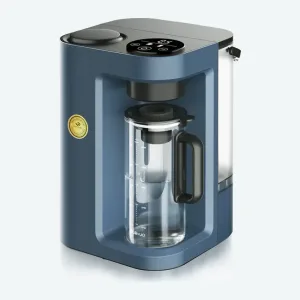
ROPOT-Lite
$299bluevua.com
Certified 12-month cartridge$108/yr cartridges1-yr warranty
 Under-sink filters32 models · from $58.9929 certified for health claims
 Reverse osmosis20 models · from $162.2312 certified for health claims
 Whole-house systems12 models · from $2583 certified for health claims
 Well water systems4 models · from $535.990 certified for health claims
 Shower filters15 models · from $29.950 certified for health claims
 Pitchers14 models · from $22.997 certified for health claims
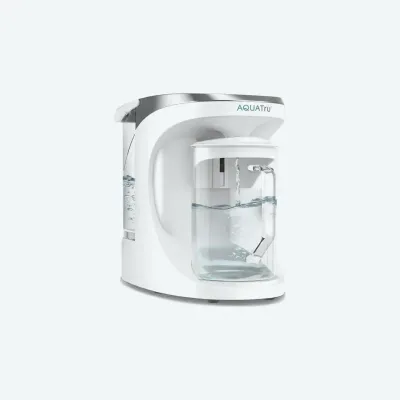 Countertop filters7 models · from $79.995 certified for health claims
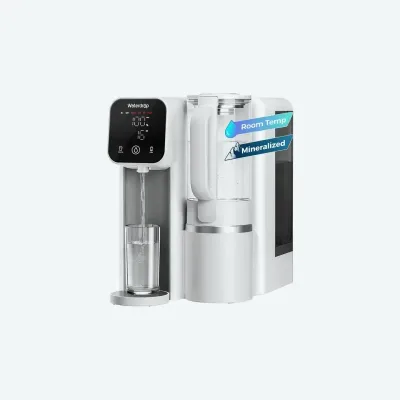 Countertop RO systems9 models · from $2194 certified for health claims
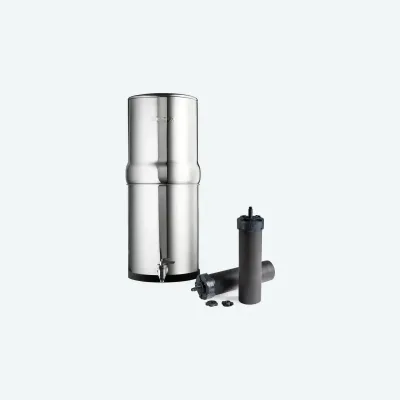 Gravity filters18 models · from $95.957 certified for health claims
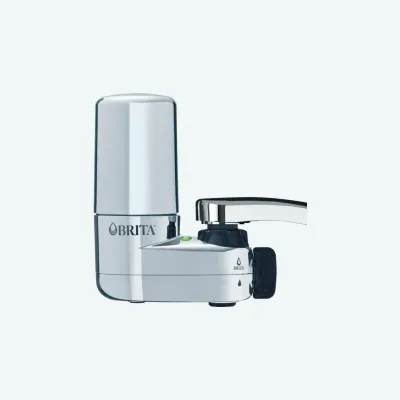 Faucet filters6 models · from $27.495 certified for health claims All water filtersBrowse 137 →
9 countertop RO systems compared on listings, flow, cost per year and warranty. Our top pick is the Bluevua ROPOT-Lite. Read the full summary ↓
 By Daryna Klochko · Published · Prices checked Oct 14 to Oct 15, 2026
| Model | Certification | Price | Certified to reduce | Cartridge life | Cost per year | Install | Warranty | Returns |
|---|---|---|---|---|---|---|---|---|
| Bluevua ROPOT-Lite | Certified 58 | $299 | Lead · Cadmium · Trivalent chromium · TDS | 12-month cartridge | $108 | No install | 1 year | 30 days |
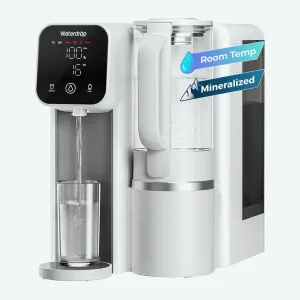
| Waterdrop M6SL Mineral Countertop RO | Certified 58 | $329 | TDS | 1,100 gal claimed | $70 | No install | 1 year | 30 days |
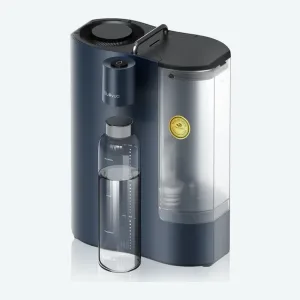
| Bluevua ROPOT-Travel | Certified 58 | $219 | Cadmium · Trivalent chromium · TDS | 6-month cartridge | $100 | No install | 1 year | 30 days |
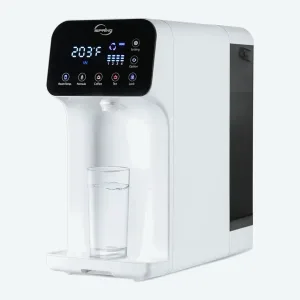
| iSpring RCD100 Countertop RO with Hot Water | No listing found | $419.99 | Brand claims only | 6-month cartridge | $80 | No install | 1 year | 30 days |
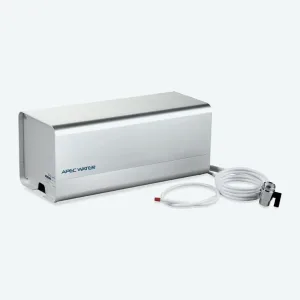
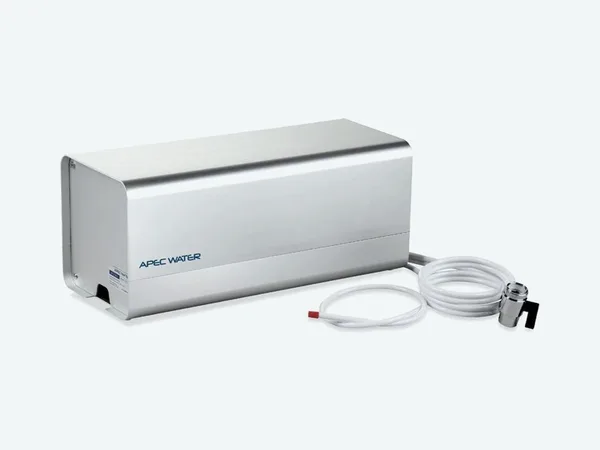
| APEC Water RO-CTOP-C Portable Countertop RO | Materials listing only | $269.95 | Brand claims only | 6-month cartridge | $90 | No install | 1 year | 30 days |
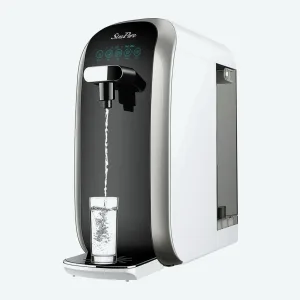
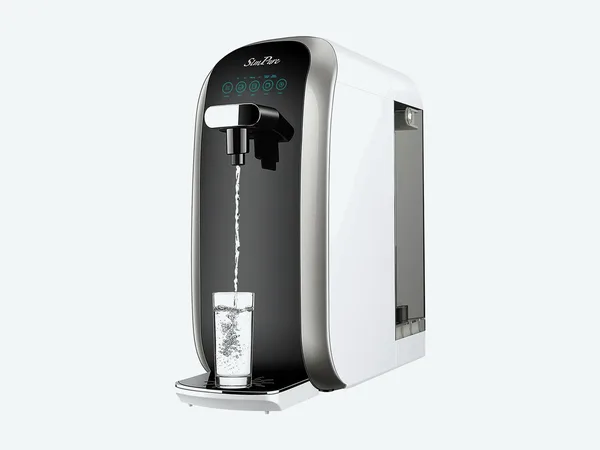
| SimPure Y7P-BW Countertop RO | Lab-tested, not certified | $369.99 | Brand claims only | 6-month cartridge | $100 | No install | 1 year | 30 days |
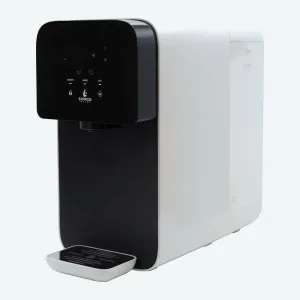
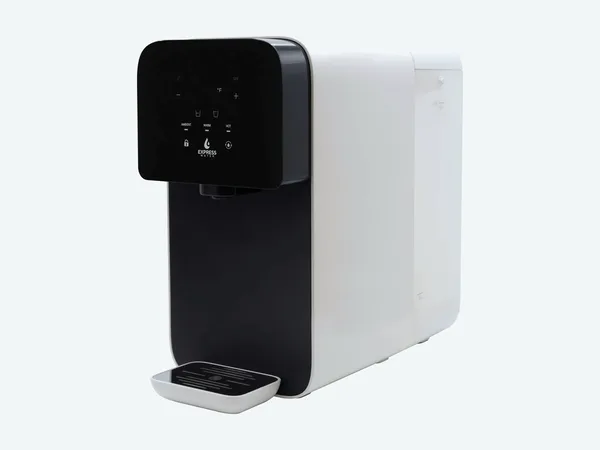
| Express Water ROC001 5-Stage Countertop RO, Instant Hot | Materials listing only | $299.99 | Brand claims only | 6-month cartridge | $139 | No install | 1 year | 30 days |
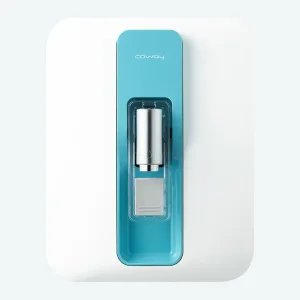
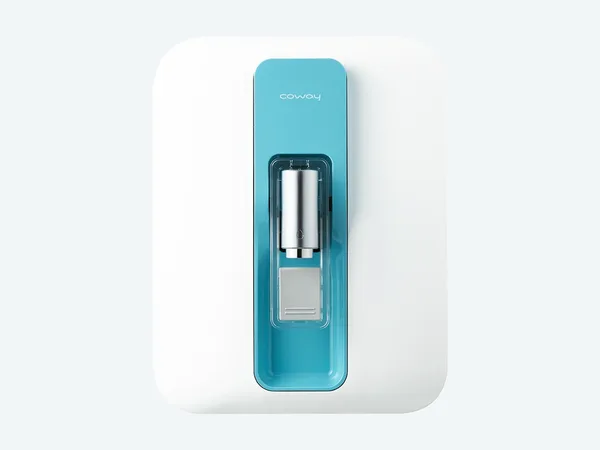
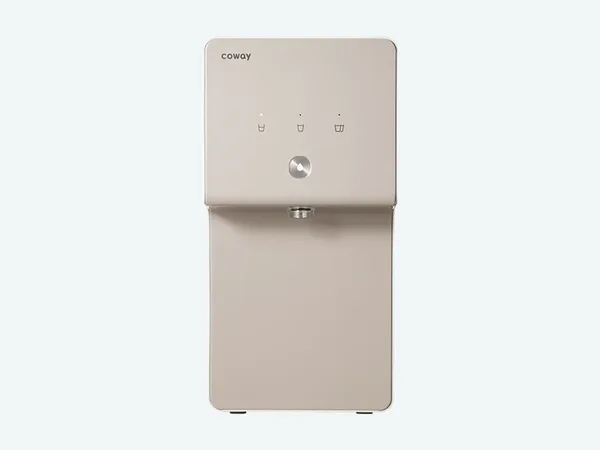
| Coway Modern Countertop RO (P-300L) | Certified 42 · 53 · 58 · 401 | $1,099 | Lead · Cysts · VOCs · PFAS +4 | 6-month cartridge | $216 | Not stated | 1 year | 3 days |
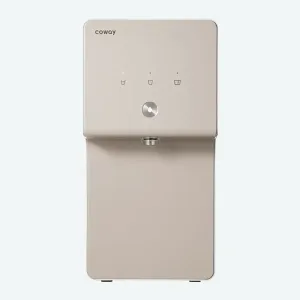
| Coway Prime Countertop RO (P-6320L) | Certified 42 · 53 · 58 · 401 | $1,199 | Lead · Cysts · VOCs · Microplastics +3 | 6-month cartridge | $170 | Not stated | 1 year | 3 days |
We track 9 countertop RO systems. 2 models share the highest score, 9.5/10: Bluevua ROPOT-Lite and Waterdrop M6SL Mineral Countertop RO. Our top pick among them is Bluevua ROPOT-Lite. 4 of 9 have a certifier listing for a health claim such as lead or PFOA/PFOS. The rest are listed for chlorine, taste, odor or TDS only or carry brand claims we couldn't match to a listing. Prices run $219 to $1,199, checked Oct 14 to Oct 15, 2026. The lowest-priced certified option is Bluevua ROPOT-Travel at $219.
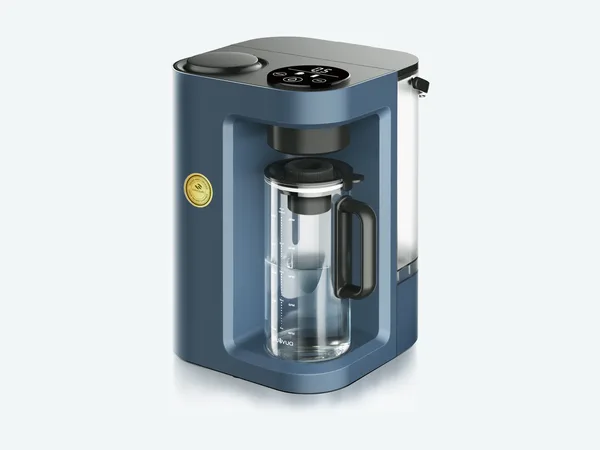
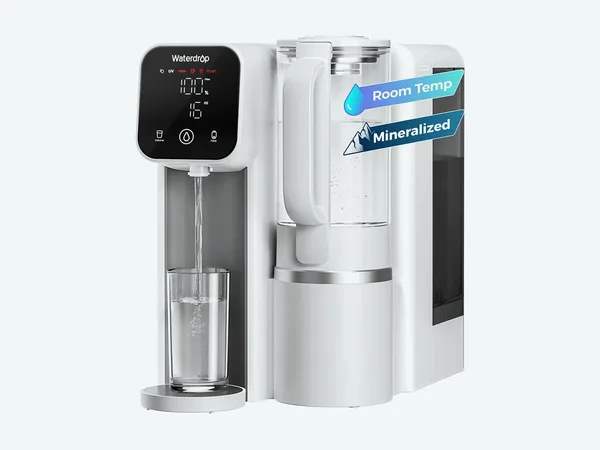
Two countertop reverse osmosis systems share the top score on my five checks. The Waterdrop M6SL ($329, $269 with the code on Waterdrop’s page) costs the least to run: one filter a year at $69.99. IAPMO lists it under NSF/ANSI 58 for TDS only, and Waterdrop rates it at 75 gallons a day and 3:1 pure to drain. If lead is in your water report, pick the Bluevua ROPOT-Lite ($299 on sale): it is the only one of the six that WQA lists for lead, it fills a 40-ounce glass carafe, and Bluevua also gives 3:1. Its filters cost the most here, about $108 a year. Brand prices were checked October 14, 2026. None of the six is listed for fluoride, arsenic or PFAS.
A countertop reverse osmosis system sits next to the sink and needs no drilling. Five of the six here plug into an outlet: you fill a feed tank from the tap, and the unit pushes it through a membrane into a carafe, a bottle or your glass. The sixth runs on faucet pressure. They differ in what a certifier lists, how much water goes to the drain and what the filters cost each year. Prices are the brands’ own, checked October 14, 2026.
Two more countertop RO lines are in the catalog below but not in the picks. The Express Water ROC001, $299.99, is listed by WQA under NSF/ANSI 372 for lead-free materials only; the rest of the brand is in my Express Water review. Coway’s plumbed countertop units, the P-6320L and P-300L, are connected to the water line and a drain by a Coway technician. WQA lists both under NSF/ANSI 53 and 58 for lead, but Coway sells them mostly as a rental, and we have no store link for them.
Every product page here names lead, fluoride and PFAS. Only certifier listings name what a model passed in testing. I matched each model number to the WQA, IAPMO and NSF databases on October 14, 2026.
| Model | Listing | Named in the listing | The brand also claims |
|---|---|---|---|
| Bluevua ROPOT-Lite (RO100ROPOT-LITE) | WQA, NSF/ANSI 58 | Lead, cadmium, trivalent chromium, TDS; 100 gallons a day | Arsenic, PFAS, fluoride, microplastics, chlorine, chloramine |
| Bluevua ROPOT-Travel | WQA, NSF/ANSI 58 | Cadmium, trivalent chromium, TDS | Lead, arsenic, PFAS, fluoride, microplastics, chlorine |
| Waterdrop M6SL (WD-M6SL) | IAPMO, NSF/ANSI 58 | TDS | PFOA, PFOS, fluoride, arsenic, lead, chlorine, “tested by a third-party laboratory” |
| SimPure Y7P-BW | None found | — | Chlorine, PFOA/PFOS, lead, arsenic, mercury, chromium, TDS, fluoride, nitrate, microplastics, from an SGS report |
| iSpring RCD100 | None found | — | PFAS, fluoride, lead, arsenic, chlorine; “NSF/ANSI 58 Certification: Yes” in a brand comparison table |
| APEC RO-CTOP-C | WQA, NSF/ANSI 372 | Lead-free materials only, no reduction claim | TDS, arsenic, lead, fluoride, chlorine, VOCs |
The contaminants or other substances removed or reduced by this water treatment device are not necessarily in your water.
Three gaps matter. Bluevua’s WQA entry lists three versions, and only the plain ROPOT-Lite carries lead: the Lite(UV) and the Travel do not. Bluevua’s page also reads “NSF & WQA Certified”, but an NSF search for Bluevua returns no listing. Waterdrop’s IAPMO certificate for the M6SL names one substance, TDS. SimPure’s SGS report and the “NSF/ANSI 58” line on iSpring’s page are not listings: one is a lab test the brand ordered, the other sits in a table comparing iSpring’s products in general with other brands.
TDS is a count of dissolved minerals and salts. A drop in TDS shows the membrane is working. It does not tell you whether water is fit to drink, so check the substance from your water test or your utility’s annual report against the listing column, not the box.
Every reverse osmosis unit sends part of the water away with what the membrane held back. Brands give this as a pure-to-drain ratio. SimPure’s 4:1 means about four of every five gallons you pour in come out treated, the 3:1 that Waterdrop and Bluevua give for the M6SL and the ROPOT-Lite about three of four, iSpring’s 2.5:1 about five of seven. Bluevua publishes no ratio for the ROPOT-Travel, and APEC publishes none for the RO-CTOP-C.
On the M6SL the drain water collects in its own 50-ounce tank, and Waterdrop suggests reusing it for cleaning or watering plants. You empty that tank by hand. For scale, EPA’s WaterSense specification sets a floor of 30% efficiency for point-of-use RO systems: the ratios above work out to 80%, 75% and 71% on paper.
Not independently measured: all four ratios come from the brands’ product pages, not from a WaterSense test. I have not yet found an independent drain-water or TDS test of these six units that I could cite. The RO waste water calculator puts these brand ratios next to the systems with a rated efficiency.
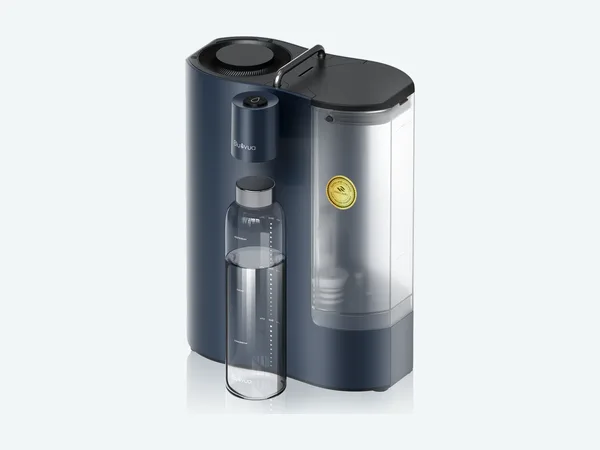
“No plastic” is a common search for these units, and no system here fully meets it. Three put the treated water in glass. The ROPOT-Lite fills a 40-ounce borosilicate glass carafe. The ROPOT-Travel fills a 20-ounce borosilicate glass bottle. The M6SL has a 40-ounce detachable glass pitcher that, per Waterdrop, refills itself when it drops below 20 ounces.
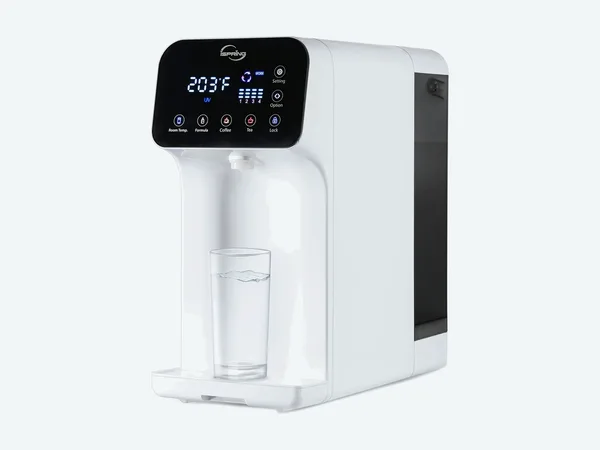
The SimPure Y7P-BW and the iSpring RCD100 dispense into your own glass or cup, and iSpring describes the RCD100 as BPA-free. APEC lists the RO-CTOP-C with “tank not included”, so its water goes into a container of your own. None of the six product pages describes the feed tank, the filter housings or the body as glass, so the water passes through plastic parts before it reaches the carafe.
If microplastics are your reason, look at the listing, not the material. Bluevua and SimPure both claim microplastic reduction. Neither has a listing for it under NSF/ANSI 401, the standard that covers it. The units that do are in filters with a microplastics listing.
Each unit takes one to four filters, each on the brand’s schedule. The “per year” column is the brand’s price for a year of filters at that schedule.
| Model | Filters | Replacement schedule | Per year |
|---|---|---|---|
| Waterdrop M6SL | M6RFL $69.99 | One filter, 12 months or 1,100 gal (brand figure) | $70 |
| iSpring RCD100 | 2-year pack F7RCD100 $160.99, membrane included | Composite filter every 6 months, post-carbon every 12, membrane every 24 (brand schedule) | $80 |
| APEC RO-CTOP-C | Stage 1–2 pre-filter set $44.95 | Stage 1–2 pre-filters every 6 months; APEC says 6 to 8 (brand figure) | $90 |
| Bluevua ROPOT-Travel | 5-in-1 filter $49.90 | One 5-in-1 filter, 6 months (brand figure) | $100 |
| SimPure Y7P-BW | 12-month kit $99.99; 6-month kit $53.99 | CF and RO filters, 6 months each (brand figure) | $100 |
| Bluevua ROPOT-Lite | 5-in-1 filter $79.90; with two remineralization filters $108.20 | One 5-in-1 filter, 12 months (brand figure) | $108 |
Only Waterdrop gives a gallon limit, 1,100 gallons for the M6RFL. A household that drinks and cooks with two gallons a day uses about 730 gallons a year, so the 12-month limit comes first and the $70 holds. The other five brands give months only, so heavy use is not priced in their schedules. iSpring’s $80 comes from its 2-year pack at $160.99, which includes the membrane. APEC’s $90 covers the stage 1–2 pre-filter set, which APEC recommends changing every 6 to 8 months. That set was out of stock on APEC’s site on October 14, 2026.
The ROPOT-Lite’s $108 includes two remineralization filters that add minerals back after the membrane. Without them it is $79.90 a year (brand prices, October 14, 2026). Whether you need minerals back is covered in is reverse osmosis water good for you. Warranties are 1 year on all six, and SimPure adds a second year with registration. Returns are open for 30 days on each.
This page compares reverse osmosis units only. The two AquaTru units, the countertop RO systems with the widest IAPMO listings I found, including arsenic, fluoride and nitrate, are compared with carbon and gravity units in countertop water filters. Look there first if your water report shows any of those three.
If you own the home and can drill, an under-sink system gives treated water on tap with no tank to fill or empty. The comparison is in reverse osmosis systems. If you are new to membranes, feed tanks and why RO makes water slowly, start with how reverse osmosis works.
If you cannot drill and want RO water, yes, with one check first. Of the six here, only the Bluevua ROPOT-Lite is listed by a certifier for a health contaminant beyond TDS: lead, cadmium and trivalent chromium. The others rest on TDS-only listings or on brand claims. If your water report shows arsenic, fluoride or nitrate, look at the AquaTru units in countertop water filters, which are listed for them.
All six brands claim fluoride reduction, but none of the six is listed by a certifier for it. The AquaTru Classic and Carafe are certified to NSF/ANSI 58 for fluoride. They are compared in countertop water filters. Every countertop RO listed for fluoride is also in the fluoride filter guide, next to the under-sink systems. The contaminants or other substances removed or reduced by this water treatment device are not necessarily in your water.
Not among the six here. The Bluevua ROPOT-Lite, the ROPOT-Travel and the Waterdrop M6SL put the treated water in a glass carafe, bottle or pitcher. Their feed tanks, filter housings and bodies are not described as glass.
Yes, every RO unit sends part of the water to a drain tank or line. SimPure gives 4:1 pure to drain, Waterdrop and Bluevua 3:1 for the M6SL and the ROPOT-Lite, and iSpring 2.5:1, all brand figures. Bluevua publishes no ratio for the ROPOT-Travel, and APEC none for the RO-CTOP-C. EPA’s WaterSense floor for point-of-use RO is 30% efficiency.
Five of the six here plug into an outlet: a pump pushes water through the membrane, and the iSpring RCD100 also heats it. The APEC RO-CTOP-C needs no outlet. It runs on the pressure from a standard kitchen faucet, which is why APEC gives its output at 60 and 50 psi.
Every system gets 1.5 to 2 points on each of 5 criteria: Certification, published specs, cost of ownership, warranty and returns and owner reviews. The score out of 10 is the sum, from 7.5 to 10. Prices were checked Oct 14 to Oct 15, 2026. Read the full method.