
Is reverse osmosis water good for you, or just different?
Ask “is reverse osmosis water good for you?” and the honest answer depends less on the membrane than on what it takes out of your particular water. RO pushes water through a very fine membrane and sends most dissolved salts and metals down the drain. The mechanics are in what reverse osmosis is and how it works. This guide covers the health side: what leaves the glass, and whether you'd miss any of it.
CDC lists lead, copper, chromium, chloride and sodium among the chemicals RO systems take out, and says they may also reduce arsenic, fluoride, radium, sulfate, calcium, magnesium, potassium, nitrate and phosphorus. That list mixes things you want gone with things your body uses.
| What RO may reduce | What the agencies say | Want less of it? |
|---|---|---|
| Lead | No known safe level in a child's blood (EPA and CDC); EPA's health goal in water is zero | Yes |
| Nitrate | Above EPA's limit of 10 mg/L, infants under six months can become seriously ill | Yes |
| Arsenic, radium | Long-term exposure above EPA limits may raise cancer risk | Yes |
| Sodium | EPA guidance of 20 mg/L for people on a 500 mg-a-day sodium diet | Depends |
| Fluoride | CDC says it helps prevent cavities | Usually no |
| Calcium, magnesium | Diet is the main source; water adds a smaller share (WHO) | Usually no |
Not necessarily in your water. This table shows what RO can lower, not what your tap contains. A water test or your utility's yearly report tells you that.
Whether your tap has lead, nitrate or arsenic to begin with is covered in is tap water safe to drink.
A TDS meter won't settle the question either. Its reading falls sharply after RO because minerals leave, but TDS isn't a safety measure: it can't tell calcium from lead.
Do you lose minerals you need?
Some, but less than the marketing on both sides suggests. WHO's 2011 guidance on drinking water from desalination, the closest large-scale case to home RO, puts it plainly: “diet remains the principal source of nutrients and minerals,” and drinking water “may provide supplemental amounts that could be important for some people.” Later in the same guidance it adds that water “should not be relied upon as a major contributor” of trace nutrients.
The numbers show why. The NIH Office of Dietary Supplements sets adult magnesium needs at 310 to 420 mg a day. Two liters of water carrying 10 mg/L of magnesium, a level that comes up in the WHO studies below, adds 20 mg. That's about 5 to 6% of the daily target. RO costs you that slice, not the bulk. Distillation takes minerals out too: how RO water compares with distilled water sets the two side by side.
The slice matters more for some people than others. ODS notes that many people in the United States consume less magnesium than recommended, with men 71 and older and teenagers at the highest risk of low intake. It also says outright deficiency is uncommon in healthy people. If you're in a low-intake group, food is the bigger lever: ODS lists green leafy vegetables, legumes, nuts, seeds and whole grains as good sources.
One indirect effect is easy to miss. A 2005 WHO meeting report on nutrients in drinking water notes a suggestion that very soft water may draw more calcium and magnesium out of vegetables, cereals and potatoes during cooking. It's a suggestion, not a measured household effect, but it's one reason some people cook with tap water and drink RO.
What the research says about magnesium and the heart
The strongest case for keeping minerals in water is about heart disease, and the evidence is real but limited. WHO's 2011 desalination guidance summed up the case-control studies this way: no link between water hardness or calcium and heart attacks or deaths from cardiovascular disease, but a negative, protective-looking link between drinking-water magnesium and cardiovascular deaths. Where benefits were statistically significant, they generally showed up at magnesium levels of about 10 mg/L and above.
WHO adds the caveat in the same paragraph: the association “does not necessarily demonstrate causality.” The 2005 meeting went further and called the hard-water benefit hypothesis “probably valid,” while asking WHO to check its biological plausibility before issuing guidance. On the treatment side, ODS says clinical trials suggest magnesium supplements only marginally lower blood pressure.
A separate hypothesis, that very low-mineral water harms the gut even with a good diet, “remains controversial in many quarters,” per WHO 2011. The fair reading: water magnesium may help the heart across a population, but that isn't proven. For your own health questions, see our health disclaimer.
Is RO water acidic, and does that matter?
RO water is low in minerals and poorly buffered, and brands sell mineral stages to raise its pH. The agency sources tie pH to pipes and taste, not to health. WHO describes desalinated water as “low in minerals and poorly buffered” and “usually aggressive” to metal and cement, which is why utilities condition it before it goes out. Home RO water behaves the same way on a smaller scale.
University of Nebraska–Lincoln Extension says RO water can be more corrosive than untreated water, so home systems come with their own plumbing and a separate faucet. That keeps aggressive water out of copper and brass lines, where it could pick up metal.
EPA lists pH 6.5 to 8.5 among its secondary standards. These are non-enforceable guidelines for taste, odor and plumbing, not health limits. Below that range water can taste bitter or metallic and corrode pipes. Brand pages call their mineral stages “alkaline.” None of the agency sources used here makes a health claim for alkaline water, so read that word as a taste and pH note.
Sodium: a plus on a low-salt diet
For people told to cut sodium, RO is one of the few home options that lowers it. CDC lists sodium among the chemicals RO systems take out. EPA sets a drinking-water guidance level of 20 mg/L for people on a very low-sodium diet of 500 mg a day, and suggests they check the sodium in their supply and consider point-of-use treatment.
For everyone else, water sodium is small. EPA notes that 30 to 60 mg/L, a level most people wouldn't taste as salty, adds only 2.5 to 5% of the dietary sodium goal at two liters a day. The exception is a salt-based softener, which EPA lists among the sources that add sodium to household water. RO at the kitchen tap brings that back down for drinking and cooking.
Fluoride: the trade-off to know about
RO lowers fluoride along with everything else, and that's the one loss health agencies call out. CDC warns that some filters take out beneficial chemicals, naming fluoride, which it says prevents cavities. Its advice: if your tap water is already free of harmful germs and chemicals, you may not want to filter it. WHO 2011 also notes that desalination depletes fluoride and puts the usual optimal level at 0.5 to 1 mg/L.
EPA treats fluoride from the other direction too. Its enforceable limit is 4.0 mg/L, above which bone disease is a concern, and children may get mottled teeth. EPA lists erosion of natural deposits among fluoride sources, so a well can carry it naturally. Where a test shows high fluoride, RO's reduction is a plus.
So check two things: whether your utility adds fluoride, and how much your well or tap carries. If the water is fluoridated and you have children, ask your dentist how they'd make up for an RO drinking tap.
Who gains the most from RO water
RO water is most clearly good for you when your test shows something it reduces. EPA's drinking water regulations spell out the stakes for the main targets:
- Nitrate. Above EPA's limit of 10 mg/L, infants under six months can become seriously ill, with shortness of breath and blue-baby syndrome. Sources EPA lists include fertilizer runoff and leaking septic tanks.
- Lead. EPA's health goal in water is zero. EPA notes that young children, infants and fetuses are especially vulnerable, because lead affects them at lower exposures than adults.
- Arsenic and radium. Long-term exposure above EPA's limits may raise cancer risk. EPA lists erosion of natural deposits as a source of both.
Not necessarily in your water. RO can reduce these substances. Whether your tap contains them is a question for a water test. To compare systems by the substances in their certification listing, see the best reverse osmosis systems.
Remineralizing RO water: cartridges, drops and what brands disclose
If you'd rather keep some minerals, there are two routes. One is a mineral cartridge after the membrane that dissolves calcium and magnesium back into the water. The other is mineral drops or packets added to a glass or pitcher. The 2005 WHO meeting suggested that adding calcium and magnesium back to demineralized water “would likely provide health benefits,” and WHO 2011 called for more work on the right levels.
Here's what four of the RO systems we track say about their mineral stages. We read each brand page on October 13, 2026.
| System | Mineral stage | What the brand publishes |
|---|---|---|
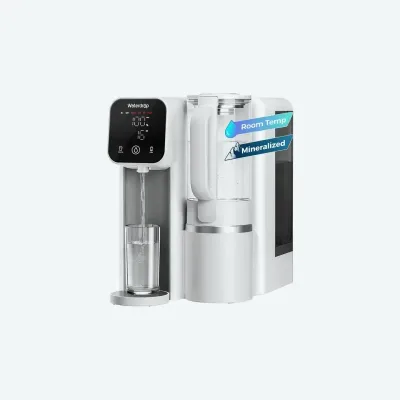
| Waterdrop X12 | Built in | Adds calcium and magnesium; pH “7.5±” |
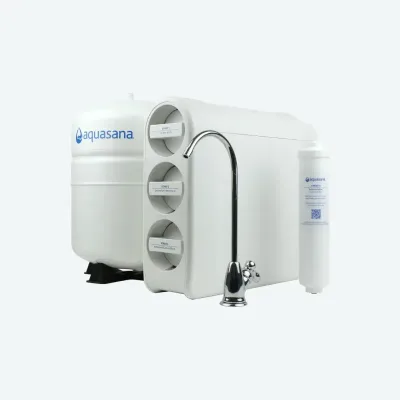
| Aquasana SmartFlow RO | Built in, stage 4 | “Restores healthy minerals” to improve pH and alkalinity; no figures |
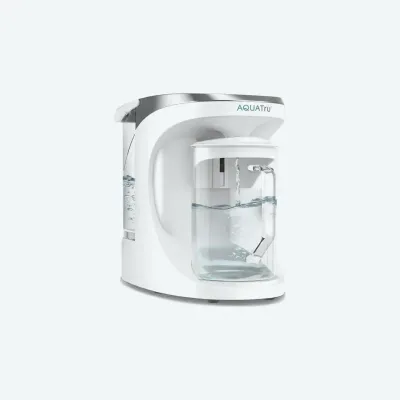
| AquaTru Under Sink | Optional filter at purchase | Adds minerals “like magnesium and calcium”; no figures |
| Waterdrop G3P800 | Not built in; MNR35 add-on, $29.99 | — |
The finding: none of the four brands publishes how many mg/L of calcium or magnesium its stage adds. Only Waterdrop gives a pH target. That means you can't tell from the box whether a cartridge gets anywhere near the 10 mg/L of magnesium that WHO's studies point to. A hardness test strip, which reads calcium and magnesium together, is a cheap way to see what yours actually adds.
Drops and packets list their content per serving on the label. Compare it with the 310 to 420 mg magnesium figure above. These three systems have a mineral stage. Check each listing for the substances in your test:
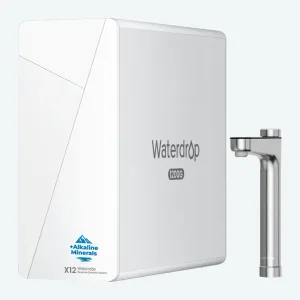
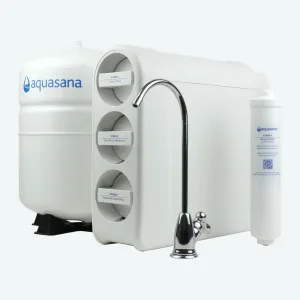
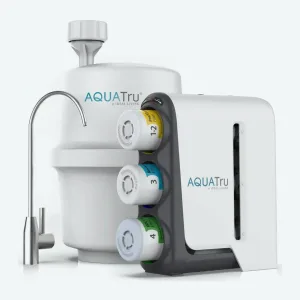
X12 holds an IAPMO listing for TDS only, and its other reductions are brand claims. Aquasana's remineralizer costs $31.49 every six months on top of its other filters (price checked October 13, 2026). AquaTru's mineral filter takes the place of the standard stage 4 VOC filter and lasts 12 months or 360 gallons.
Test your water before deciding
The answer to whether RO water is good for you sits in your own water report. On city water, your utility's yearly Consumer Confidence Report lists what was found and at what level. On a private well, testing is up to you, and a lab test for nitrate, arsenic, lead and fluoride is the place to start. Our water test kit guide compares the options.
If the test shows nitrate, lead, arsenic or high sodium, RO addresses what you found, as long as the system's listing covers that substance. If the water is clean and fluoridated, RO is mostly a taste choice, and you'd give up fluoride for it.
This guide is general information, not medical advice. Pregnancy, infant formula, kidney disease and low-sodium diets are worth raising with your doctor. See our health disclaimer.
Questions people ask
Is reverse osmosis water OK to drink during pregnancy?
None of the agency sources we used gives pregnancy-specific advice on RO water. What they do flag is lead: EPA says fetuses, infants and young children are especially vulnerable. Where a test shows lead, a system certified for lead reduction addresses a real risk. Minerals in pregnancy come mainly from food and prenatal care, so ask your doctor or midwife.
Does reverse osmosis reduce fluoride?
Yes. CDC lists fluoride among what RO may reduce. Of the RO systems we track, 12 are certified to NSF/ANSI 58 for fluoride, among them Pentair OMNIFilter RO2050 4-Stage Reverse Osmosis (NSF), Brondell Capella RC250 Reverse Osmosis (WQA) and AquaTru Carafe Countertop RO (IAPMO). Not every RO listing names fluoride: Waterdrop X12's covers TDS only. All 12 are on our best fluoride water filters list. If your water is fluoridated, CDC notes you'd be giving up a benefit for teeth.
Should you add minerals back to RO water?
It's optional for most people. WHO says food is the main source of calcium and magnesium, and water adds a smaller share. If you want them back, a mineral cartridge or drops will do it. No brand we checked publishes how much its cartridge adds, so a hardness test strip is the way to find out.
Can you drink reverse osmosis water every day?
Nothing in the WHO, EPA, CDC or NIH material we reviewed sets a limit on daily RO water for people who eat a normal diet. WHO's open questions concern long-term low-mineral water across whole populations, mainly magnesium and heart health. If your diet is low in magnesium, food or a mineral stage closes that gap.
Ready to pick one?
I compare 20 RO systems on certification, yearly cartridge cost, warranty and owner reviews. These score highest right now.