
Your utility’s lead number is not the number at your tap
Lead in tap water usually comes from the pipes, not from the river or well that supplies them. EPA says it often results from corrosion of plumbing that belongs to the customer: lead service lines, lead solder, brass or chrome-plated faucets. Homes built before 1986 are the most likely to have them. The water picks lead up on the way in, so the level differs from house to house and even from tap to tap.
That is why utilities sample inside homes and report one figure, the 90th percentile: the level that 9 in 10 sampled taps were at or below. Los Angeles reported 3.9 ppb for 2023, well under the 15 ppb action level, from 105 home taps. 3 of those taps were above 15 ppb anyway. A low city figure describes the system, not your own faucet.
CDC adds that one sample can differ from the next by time of day, season, how the bottle was filled and how fast the water ran. You can’t see, taste or smell lead in water, and EPA calls testing the only sure way to tell whether yours has it.
364 water systems reported lead above 15 ppb in their latest round
We took the latest 90th-percentile lead result of every active community water system in EPA’s lead and copper sample file (ECHO download, file dated October 8, 2026), counting monitoring periods that end in 2023 or later. 43,305 systems had such a result. Most are low: 39,724 were at or below 5 ppb, and 17,560 reported no lead found at the 90th percentile.
364 systems were above 15 ppb, the level at which a utility must act under 40 CFR 141.80. Together they serve about 982,000 people. Above 10 ppb, the action level that applies from November 1, 2027, the count rises to 991 systems serving about 4.4 million. These are system-wide figures: in a system over the line, many homes still test low, and in a system under it, some homes test high.
| Water system | People served | Lead, 90th percentile | Monitoring period |
|---|---|---|---|
| Aurora, IL | 183,000 | 25.7 ppb | Jan–Jun 2026 |
| Elgin, IL | 114,797 | 18.5 ppb | Jan–Jun 2026 |
| Quincy, MA (MWRA water) | 106,000 | 21 ppb | 2026, yearly round |
| Troy, NY | 51,401 | 110 ppb | Jan–Jun 2026 |
| Bartlett, IL | 41,500 | 20 ppb | Jan–Jun 2026 |
Troy’s 110 ppb is the largest number in the group. Over the line, EPA requires a utility to take more steps, including public education about lead and replacing the lead service lines under its control. To see where large cities stand, the tap water safety guide lists the latest lead round for 25 of them.
Free lead tests: start with your water utility
Before you buy anything, call the utility named on your water bill. CDC says many public water systems will test drinking water for residents on request, and EPA notes that some states and utilities pay for testing. Two examples: Minneapolis mails a free lead test kit to anyone who asks through an online form or 311 and sends the results back by mail or email, and DC Water offers its customers a free lead test.
Ask the same call about your service line, the pipe from the main to your house. Every community system had to submit a first inventory of service line materials by October 16, 2024 and make it public. Systems serving more than 50,000 people must post it online (40 CFR 141.84). EPA estimates there are about four million lead service lines left in the country. You can also look yourself: EPA’s Protect Your Tap check needs only a penny or a key and a magnet at the pipe where it enters the house. A lead or unknown line is the best reason to test.
Lead water test kit, mail-in lab or strips: what each one tells you
A home lead test is a strip or cassette that changes color. Safe Home’s DIY lead test reads one of three bands, 0–4, 5–15 or above 15 ppb, in 5 minutes. WaterSafe’s lead test detects lead below 5 ppb in 8 minutes (both are brand figures). A band answers one question: are you likely over the action level? It can’t show whether a filter took you from 8 ppb to 2.
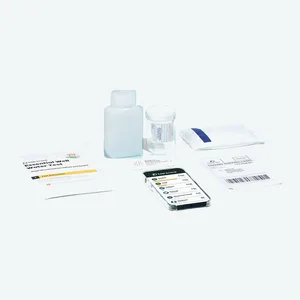
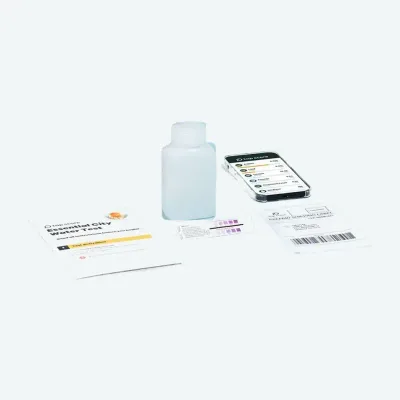
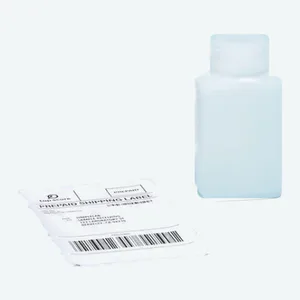
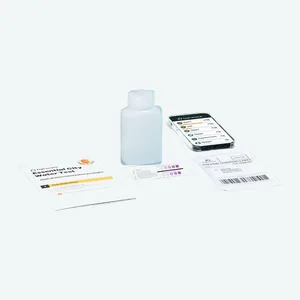
A mail-in lab kit gives that number. You fill the lab’s bottle and ship it back. The Pro-Lab lead in water test kit goes to the brand’s own lab, which reports to 1 ppb within seven business days of receiving it. Tap Score’s lead and copper test is $55 (checked Oct 14, 2026), adds copper and a pH strip, and most results arrive 3 to 5 business days after the lab gets the sample (brand figures; the Tap Score review covers the brand’s other kits). If you also want nitrate, fluoride and other metals, the Essential City panel covers lead among 49 analytes for $189.
| Option | What you get | Time | Cost |
|---|---|---|---|
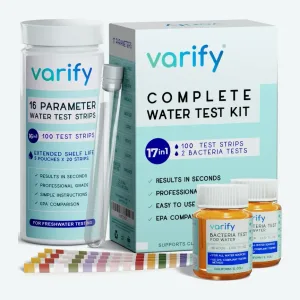
| Home strip or cassette | A band, such as 0–4, 5–15 or over 15 ppb | 1 to 10 minutes (brand figures) | $29.99 for 100 strips that read 17 items including lead (Varify) |
| Mail-in lab kit | A number in ppb from a lab | About a week, with shipping | EPA: $15 to $100. $55 for lead and copper (Tap Score) |
| Utility or health department | A number from a certified lab | Depends on the program | Often free on request |
Prices, turnaround and return terms for these and other kits are compared in our water test kit picks.
No home water test is on EPA’s list of recognized lead kits
Some water test boxes lean on EPA’s name in their claims. EPA keeps one list of recognized lead test kits, and it has three entries: the LeadCheck kit, the State of Massachusetts kit and D-Lead. All three test paint and building surfaces such as wood, drywall, plaster and metal for contractors under EPA’s renovation rule. None of them tests water.
What EPA does set for water is the lab side: it recommends a certified laboratory, and your state or local water company can name one. When a kit says its lab is certified or its method matches an EPA lab method, it is describing the lab. The kit itself isn’t on EPA’s recognized list.
How to take the sample: the first liter after 6 hours, from a cold tap
Follow the lab’s instructions over any general advice, and fill the bottle at the faucet you drink from (EPA). The method utilities use is a good model. Under 40 CFR 141.86, the sample is one liter of cold water from a kitchen or bathroom tap after the water has stood still in the pipes for at least 6 hours, so overnight or after a workday works.
- Don’t run the water first. The first liter shows what sat in the faucet and nearby plumbing all night.
- Bypass any filter. Sample the bare tap to learn what the plumbing adds. Test after the filter separately if you want to check it.
- Homes with a lead service line. Since the 2024 rule, utilities fill five one-liter bottles in a row at such homes and test the first and the fifth. Ask your lab whether it offers a second bottle.
- Time it. CDC says risk goes up while a lead line or water main is being replaced and for up to six months after, so test again in that window.
Reading the result: EPA’s goal is zero, the action level drops to 10 ppb
Labs report lead in ppb, µg/L or mg/L. The first two are the same unit, and 0.015 mg/L equals 15 ppb. A result of “not detected” means below the lab’s reporting limit, so ask what that limit is.
EPA sets the health goal for lead at zero. The 15 ppb action level is not a safe line for a home: it is the point at which a utility must act if more than 10% of its samples go over. Under the Lead and Copper Rule Improvements, the action level drops to 10 ppb for community water systems on November 1, 2027 (40 CFR 141.80). CDC adds that no safe blood lead level has been found for young children.
Water is part of the exposure, not all of it. EPA estimates drinking water can make up 20% or more of a person’s lead exposure, and 40% to 60% for infants who drink mostly formula mixed with tap water.
Lead in the result: cold water, a flush and a filter certified for lead
Any lead found is worth acting on, whatever the number. EPA and CDC give the same steps:
- Drink, cook and mix baby formula with cold water only. Boiling doesn’t reduce lead.
- Flush the pipes before you drink by running the tap, showering, washing clothes or running the dishwasher.
- Tell your utility the result and ask about the service line and any replacement program.
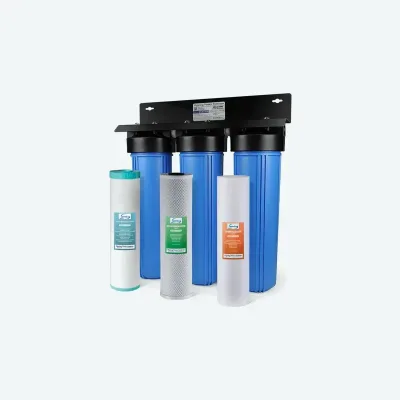
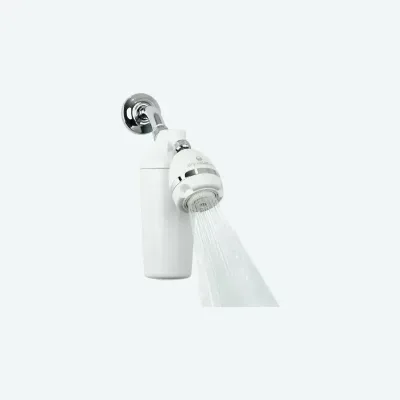
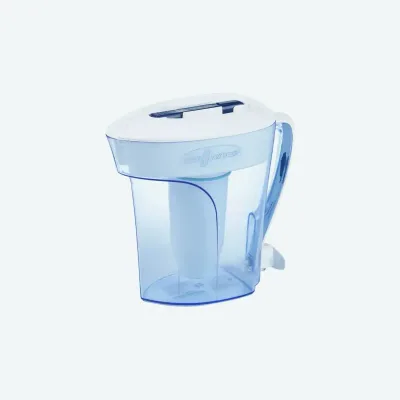
- Use a point-of-use filter that CDC describes as certified to NSF/ANSI 53 for lead and NSF/ANSI 42 for particulates, for example a certified water filter pitcher or under-sink filter, and change cartridges on schedule. All the filters we track with a lead listing are compared in water filters certified for lead.
- Test again after a filter goes in or after plumbing work.
Not necessarily in your water: a certification lists what a filter reduces in lab tests, not what your tap ends up with.
If you think a child has been exposed, CDC says to contact the child’s healthcare provider, and EPA notes a family doctor or pediatrician can run a blood test for lead. This guide is general information, not medical advice. See our health disclaimer.
Questions people ask
Can water be tested for lead?
Yes. A certified lab gives a number, through your utility or health department or a mail-in kit. Home strips and cassettes give a band in minutes and work as a screen. EPA says testing is the only sure way to know whether your water contains lead.
Does boiling water get rid of lead?
No. EPA and CDC both say boiling doesn’t reduce lead. Use cold water for drinking, cooking and formula, run the tap before use, and pick a filter certified for lead if a test finds it.
Where can I get a free lead water test kit?
Ask your water utility first: CDC says many public systems test for residents on request, and EPA says some states and utilities pay for testing. Minneapolis and DC Water are two cities that offer free lead tests. Your health department can tell you about local programs.
What is the best lead water test kit?
For a number you can act on, a lab kit. Tap Score’s lead and copper test at $55 (checked Oct 14, 2026) is the lowest-priced lab test in our test kit picks. A home strip at a lower price tells you only which band you’re in.
Is there an EPA lead water test kit?
EPA’s list of recognized lead test kits has three entries, and all three are for paint and building surfaces, not water. For water, EPA recommends a certified laboratory.
Can I shower in water with lead?
Yes. EPA and CDC say bathing and showering should be safe for adults and children even above the action level, because human skin does not absorb lead in water. The concern is drinking and cooking water.
Ready to pick one?
I compare 9 water tests on lab or strips, what they measure, price, return terms and owner reviews. These score highest right now.