ZeroWater pitcher review: what the new and original filters are certified for
2 pitchers, $34.99 to $37.99. A Zero Water pitcher is the cheapest way I found to a PFAS listing, but you pay for it in filters. As of October 14, 2026, IAPMO lists the new Culligan with ZeroWater Technology pitchers to NSF/ANSI 53 for total PFAS, fluoride, nitrate/nitrite, lead and chromium-6, with a filter rated for 20 gallons. The original ZeroWater pitchers are listed for lead, mercury, chromium-6 and PFOA/PFOS, at 15 gallons per filter. The two filters don't fit each other's pitchers. No ZeroWater pitcher is listed for microplastics.
 By Daryna Klochko · Published · Prices and listings checked Oct 14, 2026
Both ZeroWater filters
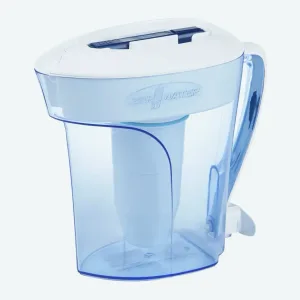
Listing: "certified" counts only substances in the certifier's public listing for that model. ZeroWater's own reduction claims that are not in a listing are shown separately on each model page.
Verdict: which ZeroWater to buy, and when to skip it
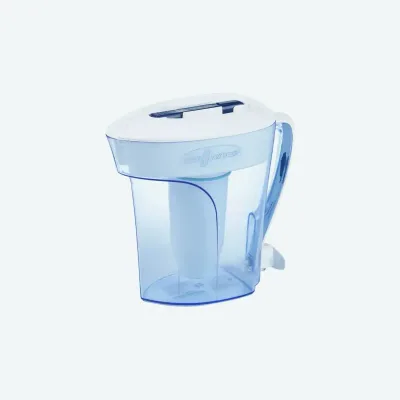
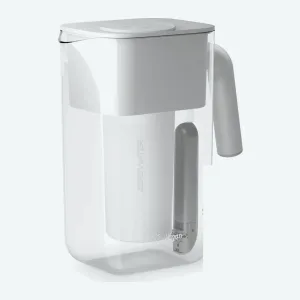
The ZeroWater 10 Cup by Culligan costs $34.99 (checked Oct 14, 2026). IAPMO lists it to NSF/ANSI 53 for total PFAS, fluoride, nitrate/nitrite, lead, mercury, cadmium, copper and chromium-6, and to NSF/ANSI 401 for 13 trace chemicals. In our database it's the only pitcher listed for fluoride.
The original ZeroWater 10 Cup costs $37.99 (checked Oct 13, 2026) and is listed for lead, mercury, chromium-6 and PFOA/PFOS. It costs more than the new pitcher, its filter is rated for fewer gallons, and new filters don't fit it.
The new filter is rated for 20 gallons, about 32 refills of a 10-cup pitcher. If you fill it once a day, that's 11 to 12 filters a year, or about $156 to $211 at brand prices on October 14, 2026. A Brita Elite filter covers the same water for about $40 a year.
Culligan says so itself. A reading of 006 or higher means a new filter.
On October 14, 2026, no ZeroWater product on sale was listed for them. The alternatives below are.
Alternatives worth considering
ZeroWater filters are listed for more than most pitchers, but they are rated for 15 or 20 gallons. If you want a filter that lasts months, or a listing ZeroWater doesn't have, these models in our database are certified for it.
Prices checked October 13–14, 2026; listings on IAPMO and WQA
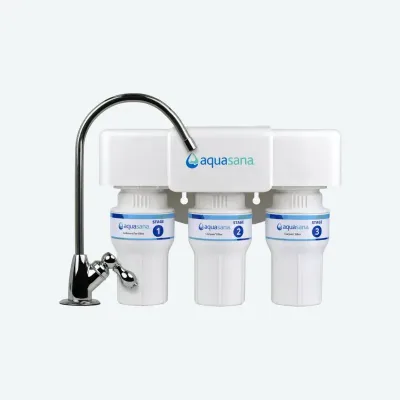
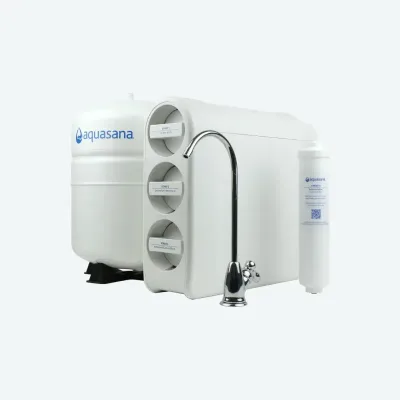
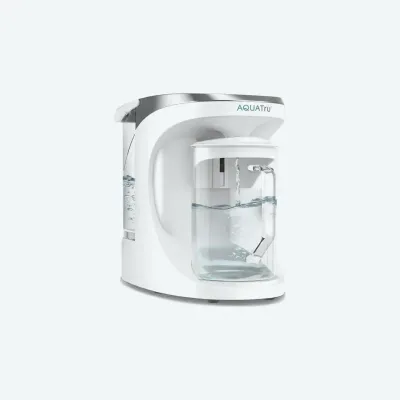
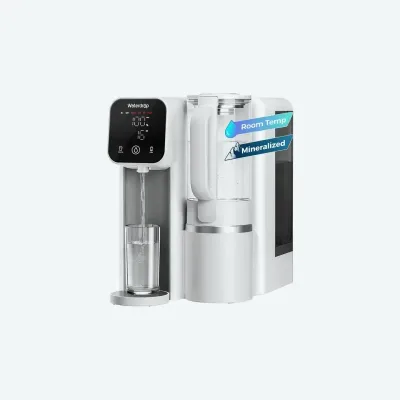
The Brita Denali Elite is the pitcher swap if lead is your concern and PFAS isn't: its filter lasts six times longer, about $40 a year. The Waterdrop ED01 is a countertop dispenser with an electric pump, at $49.99. The Aquasana Clean Water Machine ($399.99) and the AquaTru Carafe ($375) cost ten times as much and need counter space, but filters run about $73 and $130 a year. AquaTru is reverse osmosis and is listed for fluoride and arsenic. Prices were checked October 13–14, 2026.
To compare pitchers from every brand, see the best water filter pitchers. Countertop units are ranked in countertop water filters, and fluoride options in reverse osmosis systems.
ZeroWater lineup: two generations, two stores
ZeroWater now sells two product lines that look alike but take different filters. The new pitchers and dispensers are sold as Culligan with ZeroWater Technology on shop.culligan.com. The original line, with the filter that screws into the bottom of the reservoir, is still sold on zerowater.com. I went through both stores on October 14, 2026.
| Product | Price | Filter | Store |
|---|---|---|---|
| 7 Cup Pitcher | $24.99 | New top-in filter | Culligan |
| 10 Cup Pitcher by Culligan | $34.99 | New top-in filter | Culligan |
| 12 Cup Pitcher | $36.99 | New top-in filter | Culligan |
| 22 Cup Dispenser | $36.99 | New top-in filter | Culligan |
| 32 Cup Dispenser | $44.99 | New top-in filter | Culligan |
| 40 Cup Glass Dispenser | $89.99 | New top-in filter | Culligan |
| Original 10 Cup Pitcher | $37.99 | Original screw-in filter | ZeroWater |
| 12 Cup Ready-Pour | $39.99, sold out | Original screw-in filter | ZeroWater |
| 22 Cup Ready-Read, with 2 filters | $62.98 | Original screw-in filter | ZeroWater |
| 32 Cup Ready-Read Dispenser | $44.99 | Original screw-in filter | ZeroWater |
| 52 Cup Ready-Read Dispenser | $64.99 | Original screw-in filter | ZeroWater |
The 40 Cup Glass Dispenser is the only glass vessel I found in either store. Neither store listed a faucet, under-sink or shower filter on October 14, 2026. ZeroWater also sells its TDS meter on its own for $20.00. Both generations come with one in the box.
IAPMO lists the new line under the name Culligan International (ZeroWater), so the Culligan brand now owns the certifications. For the rest of Culligan, from softeners to reverse osmosis, see our Culligan review. To compare ZeroWater with other filter types, start with all water filters by type.
New Culligan filter vs the original ZeroWater filter
The two filters aren't interchangeable. The new pitcher's manual says it's “Not compatible with previous bottom screw-in ZeroWater filters,” and Culligan's FAQ says “the new filters aren’t compatible with older devices.” If you own an original pitcher, you'll keep buying the original filter.
They're certified for different things too. I read both sets of IAPMO certificates on October 14, 2026.
- New filter (Culligan with ZeroWater Technology). NSF/ANSI 53: total PFAS, fluoride, nitrate/nitrite, lead, mercury, cadmium, copper and chromium-6, at 20 gallons for the pitchers. NSF/ANSI 401: atenolol, BPA, carbamazepine, DEET, estrone, ibuprofen, linuron, meprobamate, metolachlor, naproxen, nonylphenol, phenytoin and trimethoprim. NSF/ANSI 42: chlorine, taste, odor and zinc.
- Original filter. NSF/ANSI 53: lead, mercury, chromium-6, PFOA and PFOS, at 15 gallons. NSF/ANSI 42: chlorine taste and odor. No fluoride, no nitrate, no NSF/ANSI 401.
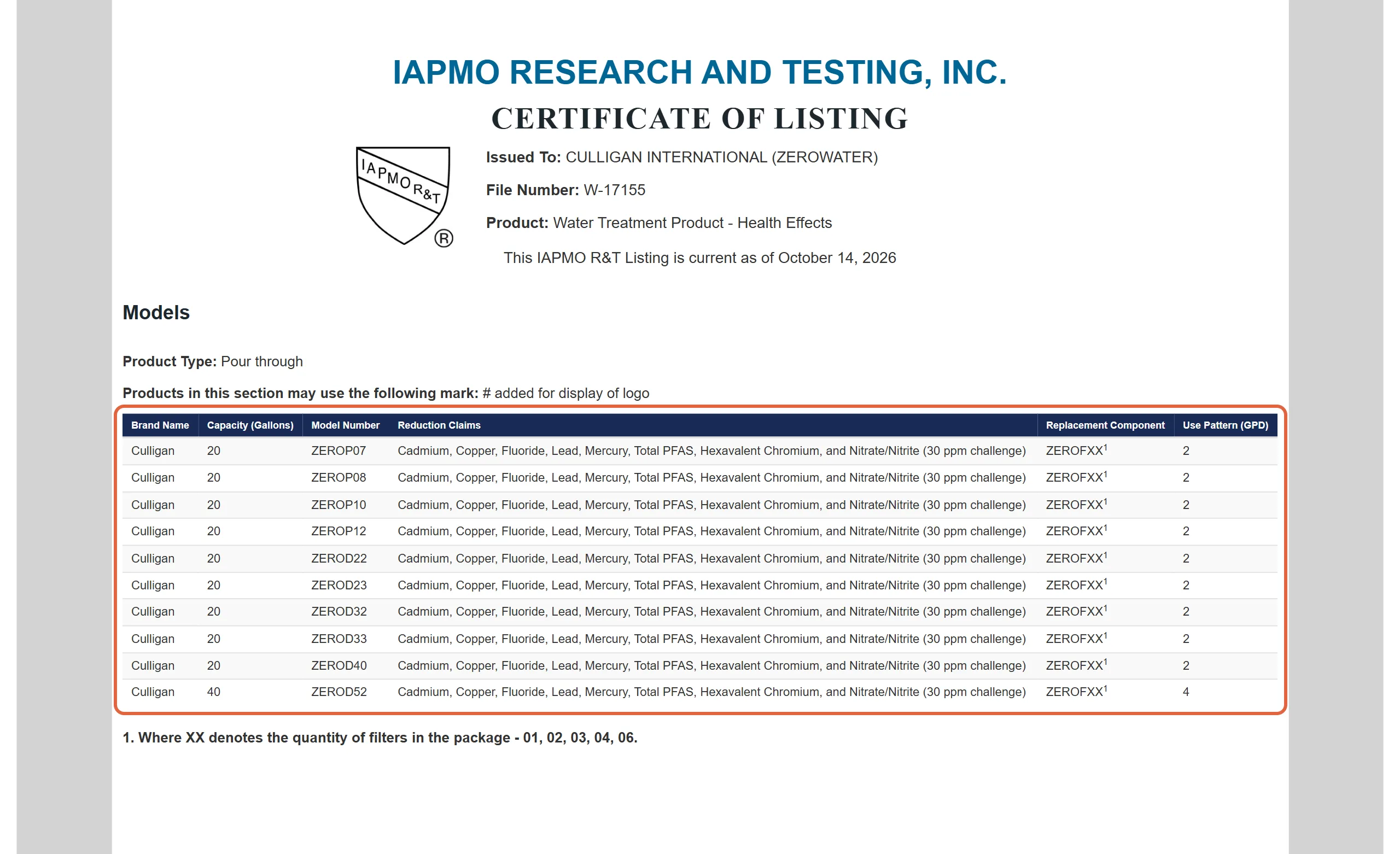
Total PFAS is broader than PFOA/PFOS: it covers the whole family of “forever chemicals,” not only the two best-known ones. Culligan's product page calls the new pitcher “The only pour-through water filtration pitcher certified to reduce Total PFAS.” I can't check every pitcher sold in the US, but in our database it's the only pitcher with a total PFAS listing. The contaminants or other substances removed or reduced by this water treatment device are not necessarily in your water.
The new filter also costs less per gallon: same pack prices, five more gallons per filter. Culligan sells the original filter too, as the Legacy ZeroWater Filter, at the same prices as the new one.
Is ZeroWater NSF certified? The listings
ZeroWater's pitcher certifications come from IAPMO, not NSF. IAPMO runs an accredited program to the same NSF/ANSI standards, so an IAPMO listing counts the same. I searched NSF, IAPMO and WQA for ZeroWater, Zero Technologies and Culligan on October 14, 2026.
- IAPMO lists the new line under certificates W-17154 (NSF/ANSI 42), W-17155 (53) and W-17156 (401). W-17155 was first listed on December 8, 2025. The original pitchers are on W-14819 (42) and W-14820 (53).
- NSF had no ZeroWater pitcher or filter listings.
- WQA lists one ZeroWater product, a faucet-mount filter, ZFM-400, for PFOA/PFOS (NSF/ANSI 53) and microplastics (NSF/ANSI 401). Neither ZeroWater store sold it on October 14, 2026, so I left it out of the lineup.
Both IAPMO listings rate a filter by gallons, not months. The new pitchers and dispensers are listed at 20 gallons, except the 52-cup dispenser at 40, and the original at 15. Those are the volumes IAPMO's challenge water ran through the filter, not a promise about your tap water. The contaminants or other substances removed or reduced by this water treatment device are not necessarily in your water.
Why a ZeroWater filter only lasts 2 weeks
A ZeroWater filter holds its listed performance for 20 gallons (new) or 15 gallons (original), and the brand doesn't give a replacement interval in months. How fast you reach that depends on how much is dissolved in your water. ZeroWater's chart in the manual converts your tap TDS into gallons:
| Tap water TDS (ppm) | Gallons per filter |
|---|---|
| 2 to 50 | 40 or more |
| 51 to 200 | 25 to 40 |
| 201 to 300 | 15 to 25 |
| 301 to 400 | 8 to 15 |
| Over 400 | 8 or fewer |
A 10-cup pitcher holds 0.625 gallons, so 8 gallons is about 13 refills and 20 gallons about 32. At one refill a day, a filter in hard, mineral-heavy water is spent in about two weeks. Amazon's review summary for the new pitcher says the filter life “receives mixed feedback, with some reporting it lasts long while others say it only lasts 1-3 days.” Culligan's warranty adds: “This warranty does not guarantee the life of the filter for any specific period or volume of use.”
Here is what that means per gallon, at brand prices on October 14, 2026:
| Filter | Rated life (listing) | Price | Per gallon |
|---|---|---|---|
| New ZeroWater filter | 20 gallons | 2 for $36.99; 12 for $163.99 | $0.92; $0.68 |
| Original ZeroWater filter | 15 gallons | $19.99; 12 for $163.99 | $1.33; $0.91 |
| Brita Elite filter | 120 gallons | $19.99 | $0.17 |
Water Filter Guru, which tested the new pitcher, lists “Highest maintenance costs of all filters we’ve tested” among its dislikes. If your tap TDS is low, the brand chart promises 40 gallons or more, and the cost per gallon halves.
The TDS meter, minerals and what one lab test found
Every ZeroWater pitcher comes with a TDS meter. The new 10 Cup has one built in: Culligan's FAQ says “When the reading hits 6 or higher and the amber light turns on, it’s time to replace your filter.” The original pitchers come with a handheld meter for the same 006 reading.
TDS is total dissolved solids: minerals, salts and metals dissolved in the water. It isn't a safety measure. Culligan's FAQ says the meter “measures Total Dissolved Solids, not specific contaminants like lead, PFAS, or bacteria.” A reading near zero tells you the filter is still working on dissolved minerals, not what else is in your water. More on what TDS can and can't tell you is in our TDS water test guide.
I found one independent lab test of the new pitcher. Water Filter Guru used it at home in Colorado and sent water before and after the filter to Tap Score's lab. This is what they report:
| Measure | Tap water | After the filter |
|---|---|---|
| TDS | 138 ppm | 5 ppm |
| Fluoride | 1.4 ppm | 0 |
| Nitrate (as N) | 2.6 ppm | 0 |
| Uranium | 0.0322 ppm | 0 |
| Calcium | 26.9 ppm | 0 |
| Magnesium | 6.58 ppm | 0 |
| Hardness | 94 ppm | 0 |
| pH | 7.6 | 6.6 |
Chlorine went from about 2 ppm to none detected. The pitcher took “just under 7 minutes to filter a full pitcher of water,” which Water Filter Guru puts at 1.9 gallons per hour. Culligan's own figure is “about 6.5 oz per minute.”
The flip side is minerals. Calcium and magnesium dropped to zero, and the reviewers list “Filtered water has an acidic pH and is demineralized” among the downsides. That's one test of one water supply, so treat it as an example, not a rating. A water test of your own tap shows what you need a filter for.
What ZeroWater owners say
I read the Amazon review summaries for the original 10 Cup on October 13, 2026 and for the new Culligan 10 Cup on October 14, 2026. Owners like the taste and dislike the filter life and leaks.
Taste wins, with doubts. The original 10 Cup averages 4.2/5 from 49,056 ratings. Of the 5,041 reviews that mention taste, 3,306 are positive.
Filter life and value are the main complaints. On the original, 1,307 of 1,754 reviews that mention filter life are negative, and 1,490 of 2,450 that mention value for money. 833 of 1,081 that mention filtering speed are negative too.
Leaks. 1,060 of the 1,201 reviews of the original pitcher that mention leakage are negative.
The new pitcher is too new to judge. The Culligan 10 Cup had 260 ratings averaging 3.9/5 on October 14, 2026, with 17% at one star. Amazon's summary says that “While some customers consider it a great value for money, others find it more expensive to use.”
ZeroWater warranty, returns and filter recycling
The Culligan with ZeroWater Technology manual gives 90 days on the pitcher or dispenser and the TDS meter, and 30 days on filters, from the date of purchase. Dated proof of purchase is required for a claim. The original ZeroWater pitchers carry the same 90 and 30 days.
Culligan's return policy allows a full refund within 45 days only for items that are “new, unopened, and in the original manufacturer’s packaging.” Opened products fall back on the warranty. Culligan ships only within the continental US, free on orders over $55 (checked October 14, 2026).
ZeroWater runs a filter recycling program: you mail any number of used filters with a printed form, at your own cost, since it doesn't offer prepaid labels. In return it emails a $20 coupon, valid on packs of four filters or more (terms checked October 14, 2026). ZeroWater says to allow 4 to 6 weeks.
Questions people ask
Does ZeroWater filter fluoride?
Does ZeroWater filter PFAS and microplastics?
Why does my ZeroWater filter only last 2 weeks?
Do the new Culligan ZeroWater filters fit old ZeroWater pitchers?
ZeroWater vs Brita: which is better?
Does ZeroWater take out minerals like calcium?
How do I recycle ZeroWater filters?
Listing by model
NSF, WQA and IAPMO public listings, checked Oct 14, 2026. The contaminants or other substances removed or reduced by these devices are not necessarily in your water.