
What a TDS meter measures: conductivity, converted to ppm
Dissolved salts and other inorganic chemicals carry an electrical current, EPA explains, while organic compounds such as oil conduct poorly. A TDS meter reads that conductivity in microsiemens per centimeter (µS/cm) and multiplies it by a conversion factor to show ppm. HM Digital’s TDS-3, a common handheld, uses a sodium chloride factor that averages 0.5, is factory calibrated with a 342 ppm salt solution, reads to 1 ppm up to 999 ppm and is accurate to ±2% (brand figures). Aquasana calls a TDS meter generally easy to use.
Utility labs report TDS and conductance as two separate results, so their yearly reports show how the two relate in real tap water. In the 9 supplies in the New York, San Francisco, Los Angeles and Las Vegas reports, TDS runs 0.56 to 0.64 times the conductance, above the 0.5 a salt-calibrated meter assumes. Water from MWD’s Diemer plant in Los Angeles is listed at 545 mg/L TDS and 873 µS/cm. A meter using 0.5 would show about 437 ppm, roughly 20% below the lab (our estimate from the report’s figures).
That gap is a calibration choice, not a fault. A meter reading and a utility report aren’t directly comparable, but two readings from the same meter are. That’s what the meter is good at: before-and-after checks, such as the tap against an RO faucet.
Normal TDS in tap water: four city utility reports
EPA lists TDS among its secondary standards, guidelines for nuisance effects rather than health. Above 500 mg/L, it names hardness, deposits, colored water, staining and a salty taste. Utilities aren’t federally required to meet secondary standards, and the California and Nevada reports below print a higher level of 1,000 mg/L.
| City, supply | TDS average, mg/L | TDS range, mg/L | Conductance, µS/cm | TDS ÷ conductance |
|---|---|---|---|---|
| New York | 73 | 45–240 | 126 | 0.58 |
| San Francisco | 95 | 24–197 | 167 | 0.57 |
| Los Angeles, LA Aqueduct Filtration Plant | 234 | 218–265 | 394 | 0.59 |
| Los Angeles, Northern Combined Wells | 245 | 187–293 | 419 | 0.58 |
| Los Angeles, Southern Combined Wells | 251 | 191–332 | 452 | 0.56 |
| Los Angeles, MWD Weymouth plant | 536 | 456–617 | 868 | 0.62 |
| Los Angeles, MWD Diemer plant | 545 | 465–625 | 873 | 0.62 |
| Los Angeles, MWD Jensen plant | 297 | 293–301 | 504 | 0.59 |
| Las Vegas | 591 | Average only | 923 | 0.64 |
Averages run from 73 mg/L in New York to 591 in Las Vegas, about 8 times higher. Two of the six Los Angeles supplies, from MWD’s Weymouth and Diemer plants, and the Las Vegas average sit above EPA’s 500 mg/L guideline. Under EPA’s own definition that’s a matter of taste, staining and scale, not a health violation. Within Los Angeles, water from the LA Aqueduct Filtration Plant averages 234 mg/L and water from the Diemer plant 545, so neighbors in one city can read very different numbers.
Calcium and magnesium count toward TDS, but so do sodium, chloride and other salts, so a TDS reading isn’t a hardness reading. Hardness has its own test guide.
Why a TDS reading isn’t a safety test
A TDS meter can’t say what the dissolved solids are, and the contaminants people worry about most are far too small to move it. EPA sets the health goal for lead at zero, and its 15 ppb action level, the point at which a utility must act, equals 0.015 ppm. A meter that counts in whole ppm would need about 67 times that much lead to change by one digit, and the digit still wouldn’t say it was lead. EPA’s limit for PFOA and PFOS, 4.0 parts per trillion, would have to rise 250,000 times to equal a single step. Many organic chemicals barely register at all, since EPA notes that organic compounds don’t conduct electricity very well.
Brands that sell meters say the same. Aquasana writes that a TDS meter “will not tell you if your water is healthy.” ZeroWater, which packs a meter with its pitcher, warns on the TDS chart in its instructions that cities with low TDS can still have impurities such as lead.
A high reading isn’t proof of harm either. Aquasana notes that minerals such as calcium, magnesium and potassium raise it, and so does any filter with a remineralizer. For lead, see the lead in water test guide. For a wider look, a lab panel is covered below. This guide is general information, not medical advice. See our health disclaimer.
TDS meter for an RO system: how to check the membrane
- Flush first. Waterdrop’s manual for the G3P800 rates TDS rejection at 90% or more “after full flushing when working properly,” under laboratory conditions. Read only after the flush your manual calls for.
- Read the tap, then the RO faucet. Use the same meter and let both samples reach the same temperature. EPA notes that warmer water conducts more, and a meter with automatic temperature compensation adjusts for it (the TDS-3 covers 33 to 122 °F).
- Work out the rejection. Subtract the RO reading from the tap reading, divide by the tap reading and multiply by 100. 300 ppm in and 30 ppm out is 90%.
- Allow for a mineral stage. A remineralizing stage raises TDS on purpose (Aquasana), so judge a mineral model against the brand’s own figure.
- Track the trend. The University of Nebraska–Lincoln Extension notes that damaged RO membranes are not easily detected and advises testing the water periodically. Many systems have a built-in monitor for high TDS or poor TDS rejection, which UNL calls “one indicator of improper functioning.” A reading that climbs over weeks is a reason to check the filters and membrane against the manual.
How high should rejection be? Aquasana’s SmartFlow RO installation guide lists 89.6% minimum and 96.4% average membrane TDS reduction, and EPA’s WaterSense specification requires at least 75% in its membrane life test. If a flushed system stays below the brand’s own figure, contact the brand.
The percentage isn’t a verdict on safety. UNL’s example: with 80 mg/L nitrate in the water, an 85% rejection rate leaves 12 mg/L, still above EPA’s 10 mg/L limit. If you bought RO for a specific contaminant, a lab test at the RO faucet is the way to see where it ended up. Setup and the first reading are covered in how to install an RO system.
Which filters lower TDS, and what a TDS listing covers
EPA names reverse osmosis and distillation as treatments for high TDS. For RO, TDS reduction is certified under NSF/ANSI 58. Of the 32 RO systems in our database, 23 carry a certifier’s listing, and every one of those includes TDS. 6 are listed for TDS only: Express Water RO5DX 5-Stage Reverse Osmosis System, Waterdrop X12 Reverse Osmosis System, A. O. Smith AOS-DFRO800 Tankless Reverse Osmosis, Waterdrop M6SL Mineral Countertop RO, Bluevua ROPOT-Travel and Waterdrop K19-SFK Countertop RO. All but the AOS-DFRO800 also carry brand claims for lead, and the listing covers TDS alone. A TDS listing shows the membrane lowers dissolved solids under test conditions. It isn’t a listing for lead or PFAS, and any listing describes reduction in testing, not necessarily in your water.
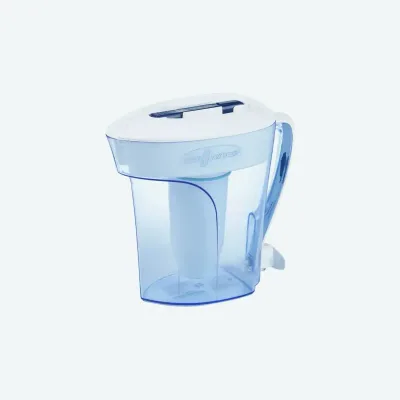
Pitchers are a different case. The ZeroWater pitcher ships with a meter and claims TDS reduction, but its certification listing doesn’t include TDS. Its instructions use the meter as a filter-life gauge: change the filter when it reads 006. The same chart runs from 40 gallons or more per filter in low-TDS water to 8 or fewer in high-TDS water.
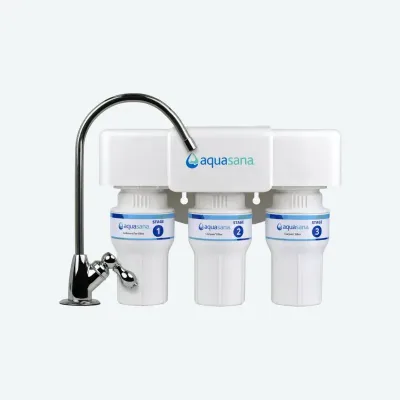
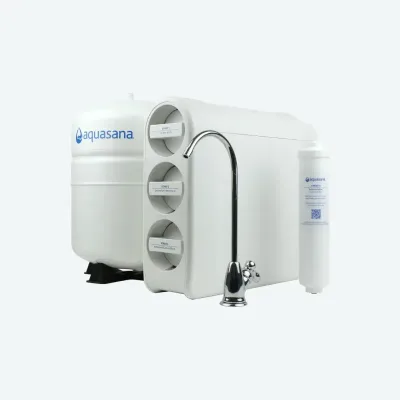
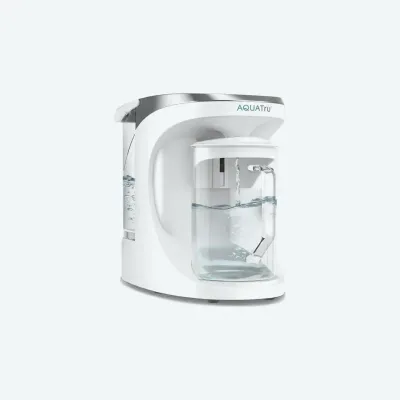
High TDS also limits RO. AquaTru’s Classic data sheet lists a maximum inlet TDS of 1,500 mg/L, and Aquasana’s SmartFlow RO 1,000 ppm. If your tap reads near those numbers, check the unit’s maximum before you buy. Compare systems in our under-sink RO picks and countertop RO picks. How the membrane works is in what is reverse osmosis, and the low-mineral question in is reverse osmosis water good for you.
Getting a reliable TDS reading at home
- Use a clean glass and the cold tap. Fill the glass with the water you mean to read, from the tap you drink from.
- Match temperatures. Conductivity rises with temperature (EPA), so read samples at the same temperature or use a meter with automatic temperature compensation.
- Check calibration. The TDS-3 is calibrated at the factory with a 342 ppm salt solution and can be recalibrated with a small screwdriver. If readings drift, check the meter in a calibration solution of known ppm.
- Know the range. The TDS-3 reads to 1 ppm up to 999 ppm and in steps of 10 ppm above that, accurate to ±2% up to 5,000 ppm (brand figures).
- Compare like with like. Meter against meter, not meter against a utility report: the factor gap above can be a fifth of the reading.
- On a private well, there is no utility report to compare with. The well water testing guide covers the yearly checks, TDS among them.
When a lab test is the better tool
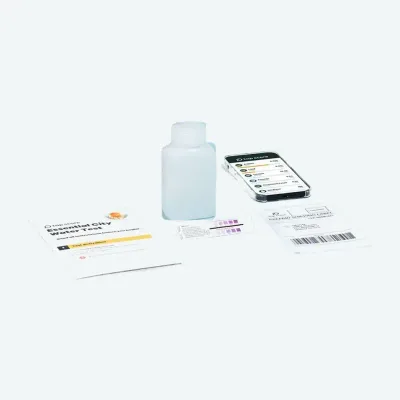
A lab measures TDS directly and reports it alongside the substances a meter can’t see. Tap Score’s Essential City Water Test reports TDS with alkalinity, hardness and pH among 49 analytes, lead included, for $189 (checked Oct 14, 2026). The Essential Well Water Test lists TDS and conductivity among 54 analytes for $209 (checked Oct 14, 2026) (brand figures).
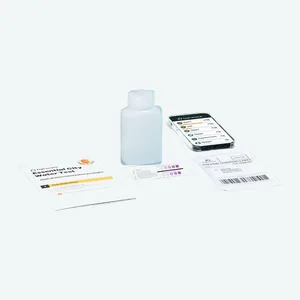
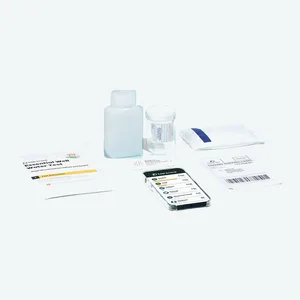
For one contaminant, a targeted test is cheaper: the lead in water test guide covers those. Prices, turnaround and return terms for home and lab kits are compared in our water test kit picks.
Questions people ask
What should the TDS of RO water be?
It depends on your tap water. Brands rate RO membranes at about 90% TDS rejection or more after flushing, so 300 ppm in should read about 30 ppm or less out. EPA’s WaterSense specification requires at least 75%. A remineralizing stage raises the reading on purpose.
What is a good TDS level for drinking water?
EPA’s secondary guideline is 500 mg/L, set for taste, staining and scale, not health. The four city reports we read average 73 to 591 mg/L. A low number doesn’t show the water is free of lead or other contaminants.
Can a TDS meter detect lead?
No. Lead at EPA’s 15 ppb action level is 0.015 ppm, far below the 1 ppm step of a handheld meter, and the meter can’t tell lead from salt. A lead test or a lab panel is needed.
Is high TDS water bad for you?
TDS alone doesn’t say. EPA treats TDS above 500 mg/L as a nuisance: taste, staining and scale. What matters for health is which substances are in the water, and that takes a lab test.
What is the best digital water quality tester?
A digital TDS meter measures one thing, dissolved solids, and is best for before-and-after checks on a filter. For lead, nitrate and the rest, a lab kit is the tool. Our water test kit picks compare them by price, turnaround and returns.
How can I check my water quality at home?
Start with your utility’s yearly water quality report. A TDS meter shows dissolved solids, test strips give color bands for a handful of items, and a lab panel gives numbers for dozens. On a private well, test yourself, since there is no utility report.
Ready to pick one?
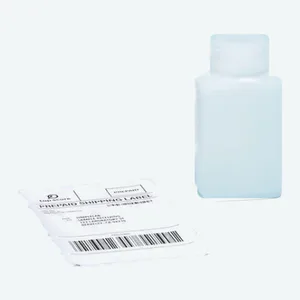
I compare 9 water tests on lab or strips, what they measure, price, return terms and owner reviews. These score highest right now.