
No agency tests a private well, and about 1 in 5 has a problem
More than 43 million people in the US, around 15% of the population, drink from private wells, EPA estimates. Federal drinking water rules don’t cover those wells, and neither do the rules of most states. No utility samples the water and no one mails you a yearly report. If you are on city water, the utility tests for you. See is tap water safe to drink instead.
A USGS study sampled private wells across the country from 1991 to 2004. About 23% of the 1,389 wells checked for most contaminants had at least one above a human-health benchmark. EPA rounds the result to about one in five. Total coliform bacteria turned up in about 34% of wells and E. coli in about 8%. The Minnesota Department of Health puts the practical problem plainly: you can’t taste, see or smell most contaminants.
The yearly test covers 4 items, not the ones most often over the limit
CDC and EPA give the same yearly list: total coliform bacteria, nitrate, total dissolved solids (TDS) and pH. CDC adds a check of the well itself every spring for mechanical problems.
- Coliform bacteria. EPA calls them “not a health threat in itself”: they show whether a path exists for harmful germs. A positive E. coli or fecal coliform result, CDC says, likely means feces have reached the well.
- Nitrate. It comes from fertilizer, septic systems and animal waste. EPA’s limit is 10 mg/L as nitrogen because infants under 6 months who drink water above it can become seriously ill.
- TDS and pH. EPA’s levels for both are secondary: set for taste, stains and pipes, not health. A shift from last year’s result tells you something changed.
The yearly list leaves out what USGS found over health benchmarks most often. Apart from nitrate and fecal bacteria, those contaminants came from rock and soil: arsenic, manganese, strontium and gross alpha radioactivity each in about 5 to 7% of wells, uranium in 1 to 2%. Radon in water was above 300 pCi/L, the lower of two limits EPA proposed, in about 65% of wells. CDC tells owners to ask the health department whether to add arsenic, radium, lead, mercury, pesticides and volatile organic compounds (VOCs).
What to test in a well, how often, and the EPA limit for each
The “when” column comes from CDC and EPA. The limits are the ones EPA sets for public water systems (primary, secondary, lead, PFAS). None of them binds a private well, but they are the yardstick EPA gives well owners for reading results.
| Test | When | EPA limit for public water | Kind of limit |
|---|---|---|---|
| Total coliform bacteria | Every year | Goal: zero | Indicator of a path for germs |
| E. coli | With coliform (optional, CDC) | Goal: zero | Health |
| Nitrate | Every year | 10 mg/L as nitrogen | Health |
| Total dissolved solids (TDS) | Every year | 500 mg/L | Taste (secondary) |
| pH | Every year | 6.5 to 8.5 | Taste, pipes (secondary) |
| Arsenic | Ask your health department | 0.010 mg/L | Health |
| Uranium | Ask your health department | 30 µg/L | Health |
| Radon | Radon in your area (EPA) | No final federal limit | Proposed only |
| Lead and copper | Lead plumbing or corroded pipes (EPA) | Lead 15 ppb, copper 1.3 mg/L | Action level |
| Iron and manganese | Stained fixtures or laundry (EPA) | 0.3 and 0.05 mg/L | Stains, taste (secondary) |
| Hardness | Scale, soap won’t lather (EPA) | None | No federal limit |
| VOCs (fuel and solvents) | Near a gas station, landfill or dry cleaner, or a fuel smell (EPA) | Set per compound | Health |
| PFOA and PFOS | Required for home sales in New Jersey | 4 ppt each, coming rule | Health |
For lead, EPA’s health goal is zero, and the 15 ppb action level only marks when a public system must take action. For bacteria, a goal of zero means any positive result calls for a second test and a call to the health department.
What is near your well decides what else to test
CDC warns that extra tests can be expensive and suggests finding out first what is a concern where you live. EPA links nearby land use and the signs you can see to specific tests. Run down this list before you pay for a large panel.
| Near your well or in your water | Test for |
|---|---|
| Repeated stomach illness in the household | Coliform bacteria |
| Lead pipes or old plumbing | pH, lead, copper |
| Radon in your area | Radon |
| Intensive farming nearby | Nitrate, nitrite, pesticides, coliform bacteria |
| Coal or other mining | Metals, pH, corrosion |
| Gas drilling | Chloride, sodium, barium, strontium |
| Landfill, gas station or dry cleaner | VOCs, TDS, pH, sulfate, chloride, metals |
| Gasoline or fuel smell | VOCs |
| Bad taste or smell | Hydrogen sulfide, corrosion, metals |
| Stained fixtures or laundry | Iron, copper, manganese |
| Salty taste, seawater or a salted road nearby | Chloride, TDS, sodium |
| Scale, soap won’t lather | Hardness |
Nitrate is on the yearly list because it has so many sources: EPA traces it to chemical fertilizers, human sewage and animal waste, which reach a well through groundwater and runoff. High nitrate is most serious for infants.
Test right away after a flood, a repair, a pregnancy or a new baby
Outside the yearly test, CDC and EPA list moments to test without waiting:
- Flooding, land disturbance or new construction near the well, or a waste site nearby.
- Any part of the well system repaired or replaced.
- A change in taste, color or smell.
- Your health department reports problems with wells in your area.
- Someone in the home becomes pregnant, or a child starts living with you. EPA suggests testing more often when small children, older adults, or someone pregnant or nursing lives in the house.
After a flood, EPA’s steps come before the test. Stay away from the well pump to avoid electric shock. Don’t drink or wash with the water. Have a well or pump contractor clean and disinfect the well before the pump goes back on, then pump until the water runs clear.
A well water test kit from a lab gives numbers, strips only color bands
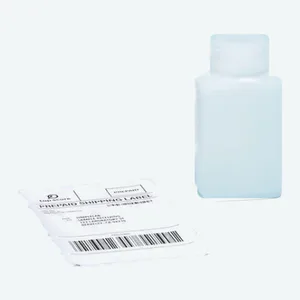
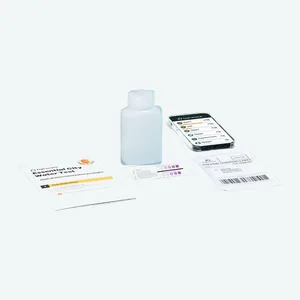
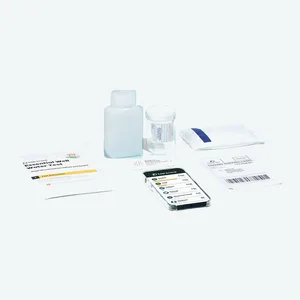
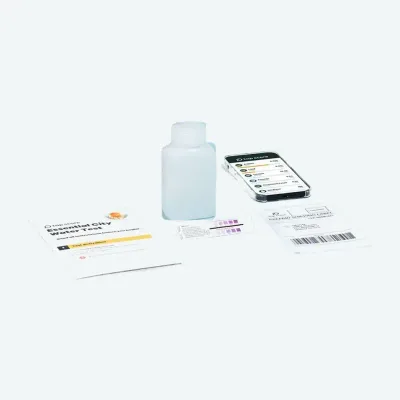
CDC and EPA both point well owners to a state-certified laboratory. Many labs sell mail-in kits: you fill their bottles at home and ship them back. Tap Score’s Essential Well test, $209 (checked Oct 14, 2026), covers 54 analytes: E. coli, total coliform, nitrate, nitrite, pH, TDS and 25 metals including arsenic, manganese and uranium. That is the CDC yearly list plus the natural metals USGS found most often. The Advanced Well test at $399 adds VOCs. Radon in water is a separate test, $145 at Tap Score on the same date.
Home test strips change color in about a minute and cost a fraction of a lab test, but they read a range, not a measured value. For a home sale in New Jersey the law requires a certified lab and collector, so neither strips nor a self-collected kit count there. Kits, prices and return terms are compared in our water test kit picks.
Your health department may test for free, but EPA does not test
EPA says it can’t test residential drinking water on request. Instead, EPA points well owners to the local health department, “which may provide private well testing for free.” CDC says local and state health or environmental departments often test for nitrate, total and fecal coliform, VOCs and pH, and keep a list of certified labs.
Each state runs its own lab certification program, and EPA’s page lists the contact for every state. When you call, ask which tests they run, whether there is a fee, and what to add for your area. CDC’s advice is the same: contact your health department to find out what other germs or chemicals to test for based on where you live.
Sample untreated water to test the well, treated water to test a filter
Use the lab’s bottles and its instructions. The Minnesota Department of Health tells owners to contact an accredited lab for sample containers and instructions, or to ask the county whether it tests wells.
A sample from before any treatment shows what the well delivers. New Jersey’s home-sale law, for example, requires a test of untreated groundwater. A second sample from the treated tap shows whether a filter, softener or UV unit does its job. CDC asks for exactly that after any treatment: test the water to make sure the treatment worked before drinking or using it.
Selling a home: New Jersey requires up to 43 tests by a certified collector
New Jersey’s Private Well Testing Act, in force since September 2002, requires the buyer or seller of a property with a drinking-water well to test the untreated water for up to 43 parameters before closing. Both sides review the results. The list includes total coliform, E. coli if coliform is found, nitrate, pH, iron, manganese, lead, arsenic, gross alpha, PFOA, PFOS, PFNA and VOCs, with mercury and uranium in some counties.
A certified collector or a representative of the lab must take the sample, so a self-collected mail-in kit doesn’t qualify. NJDEP puts the average price at $1,200 to $1,500 (as of September 2026). Landlords with wells must test every five years and give each tenant the results. Most states don’t regulate private well water at all, so ask your agent or health department what applies where you are.
A result over the limit: re-test, then match the treatment to the contaminant
Your report should list the concentration of each item the lab measured and may compare it with EPA standards. If it doesn’t, use the table above. When a result is over a health limit, EPA says to contact your health department and test the well again to confirm the contaminant and its level.
- Meanwhile. CDC says to use bottled water or another source. Boiling works for germs only and will not take out nitrate, arsenic or other chemicals. With chemical contamination, CDC says not to drink or use the water for any purpose until it is treated.
- Bacteria. EPA lists well disinfection with chlorine, ozone or ultraviolet light, then a re-test. UV systems are compared by their NSF/ANSI 55 class.
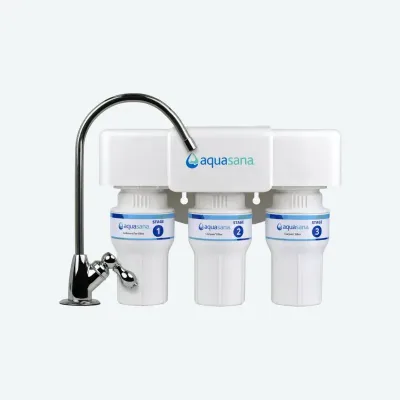
- Chemicals. CDC: no single treatment type protects against all problems. Pick a system certified for the contaminant on your report, and test again once it is installed. The well water filters compared here show which ones carry such a listing.
- No easy fix. Depending on the contaminant, its level and the well, EPA says you may need a new water source or a new well.
Not necessarily in your water: a certification lists what a system reduces in lab tests, not what is in your well.
This guide is general information, not medical advice. For a result over a health limit, or during pregnancy or for a baby’s formula, follow your doctor and health department. See our health disclaimer.
Questions people ask
Are home well water test kits accurate?
Strips and color tests read a range, not a measured value, so they work as a screen. For a number you can act on, CDC and EPA recommend a state-certified lab. EPA also says to re-test to confirm any result over a health limit before you act. Mail-in lab kits and strips are compared in our test kit picks.
Where can I get my well water tested for free?
Start with your local health department: EPA says it may test private wells for free, and CDC says state and local departments often test for nitrate, coliform bacteria, VOCs and pH. EPA itself doesn’t test home water. Your state’s lab certification program can list labs that do.
What are the signs my well water might be making me sick?
Signs are unreliable: most contaminants can’t be seen, tasted or smelled, the Minnesota Department of Health notes. EPA links repeated stomach illness in a household to a coliform bacteria test. If someone is ill, see a doctor, switch to bottled water and test the well.
How often should you test well water?
Every year for total coliform bacteria, nitrate, TDS and pH (CDC, EPA), and right away after a flood, a well repair, a change in taste or smell, a pregnancy or a new child in the home. EPA suggests testing more often when small children, older adults, or someone pregnant or nursing lives in the house.
Do I need to test well water when buying a house?
In New Jersey, yes: the Private Well Testing Act requires a certified test of up to 43 parameters before closing, with the sample taken by a certified collector. Most states have no such rule, but the same CDC yearly list plus arsenic and uranium is a reasonable starting point. Ask your health department what is common locally.
Ready to pick one?
I compare 9 water tests on lab or strips, what they measure, price, return terms and owner reviews. These score highest right now.