9.25/10
US Water Systems
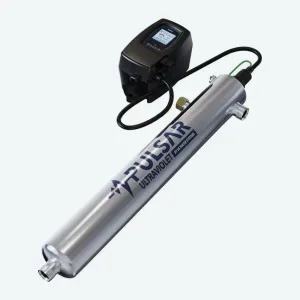
Pulsar UV Disinfection System (10 gpm)
$1,179.95uswatersystems.com
No listing found 10 gpm$111/yr cartridges10-yr warranty
 Under-sink filters32 models · from $58.9929 certified for health claims
 Reverse osmosis20 models · from $162.2312 certified for health claims
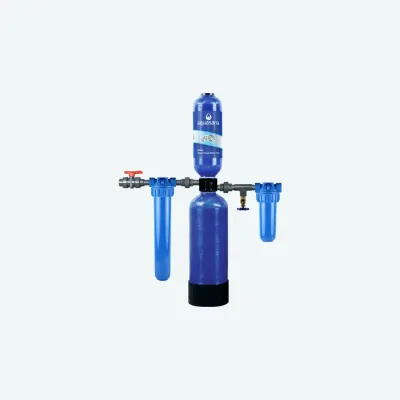 Whole-house systems12 models · from $2583 certified for health claims
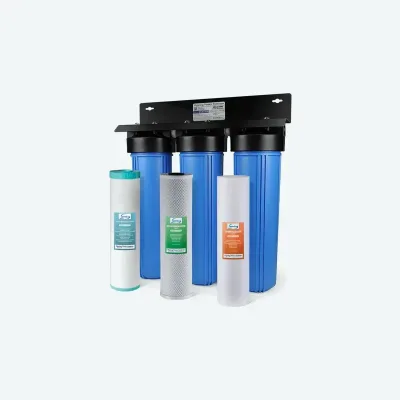 Well water systems4 models · from $535.990 certified for health claims
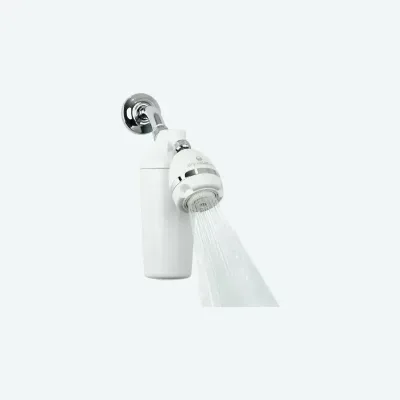 Shower filters15 models · from $29.950 certified for health claims
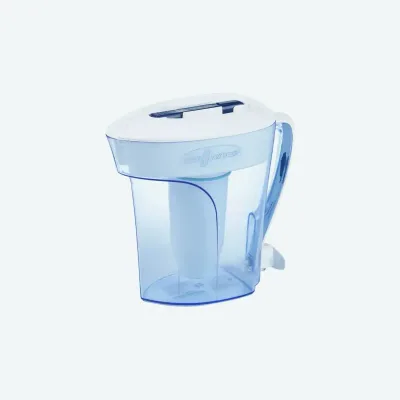 Pitchers14 models · from $22.997 certified for health claims
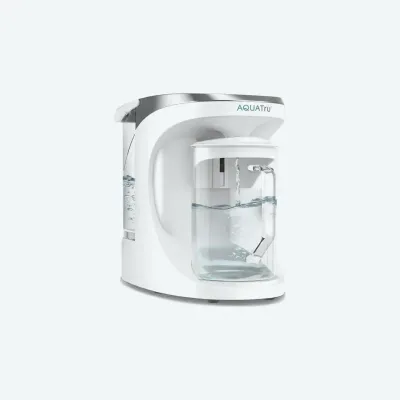 Countertop filters7 models · from $79.995 certified for health claims
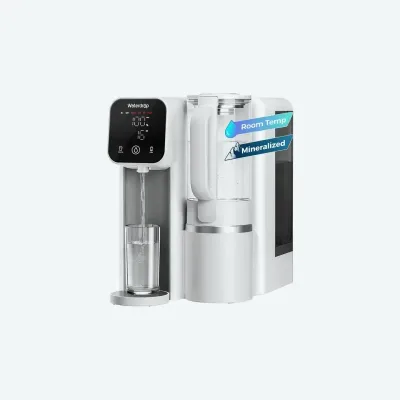 Countertop RO systems9 models · from $2194 certified for health claims
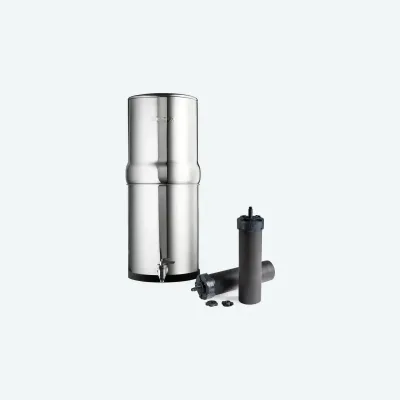 Gravity filters18 models · from $95.957 certified for health claims
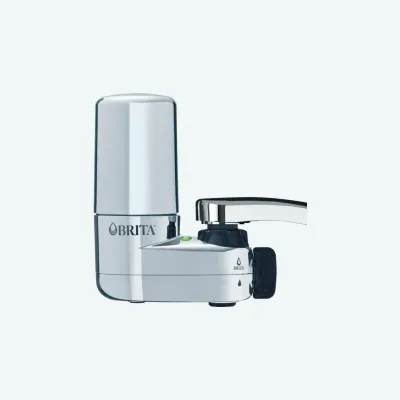 Faucet filters6 models · from $27.495 certified for health claims All water filtersBrowse 137 →
6 UV water filter systems compared on listings, flow, cost per year and warranty. Our top pick is the VIQUA PRO10 UV System (10 gpm). Read the full summary ↓
 By Daryna Klochko · Published · Prices checked Oct 14, 2026
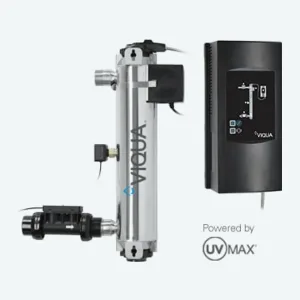
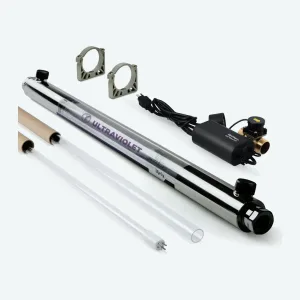
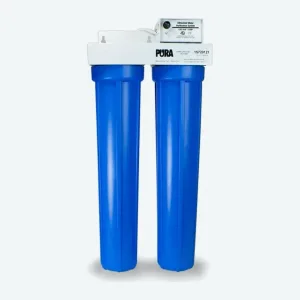
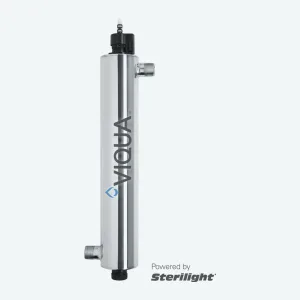
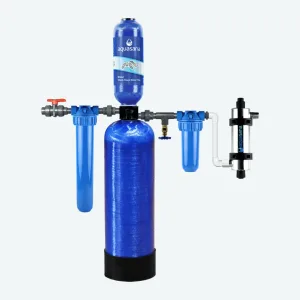
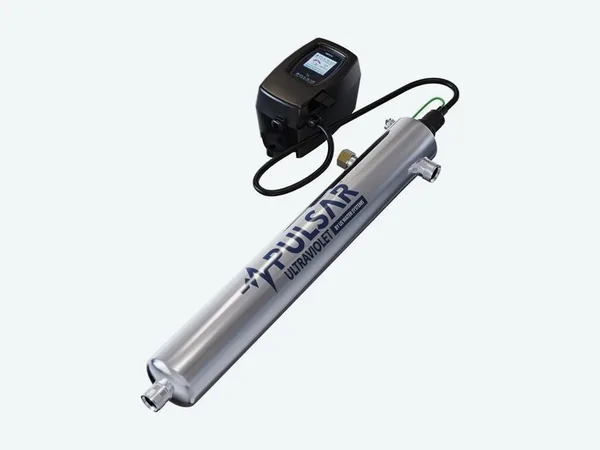
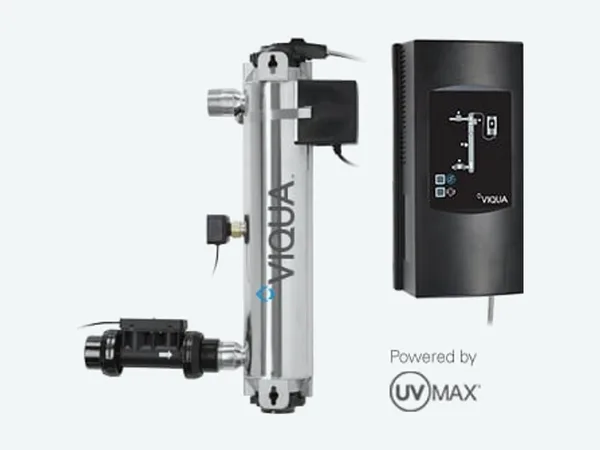
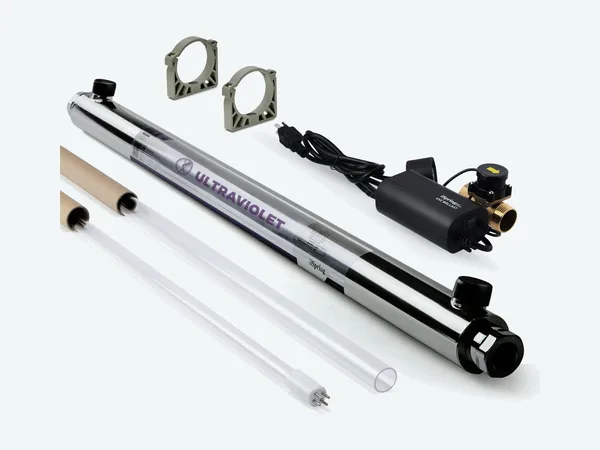
| Model | Certification | Price | Certified to reduce | Flow | Cartridge life | Cost per year | Install | Warranty | Returns |
|---|---|---|---|---|---|---|---|---|---|
| US Water Systems Pulsar UV Disinfection System (10 gpm) | No listing found | $1,179.95 | Not stated | 10 gpm | Not stated | $111 | Main line, plumber | 10 years | 60 days |
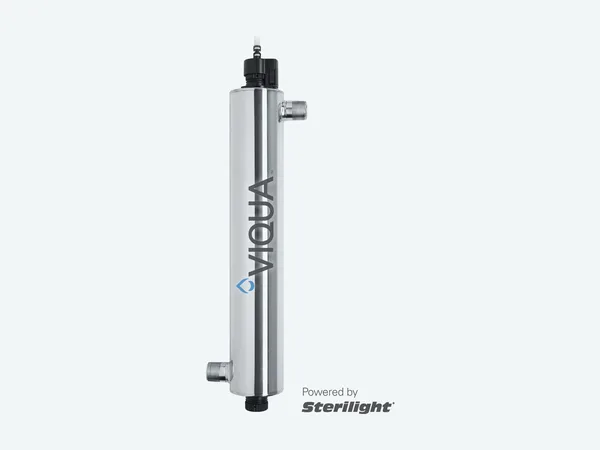
| VIQUA PRO10 UV System (10 gpm) | Certified 55 Class A | $3,175 | Not stated | 10 gpm | Not stated | $155 | Main line, plumber | 10 years | 30 days |
| iSpring UVF55FS Whole-House UV (12 gpm) | No listing found | $338.99 | Not stated | 12 gpm | Not stated | $80 | Main line, plumber | 1 year | 30 days |
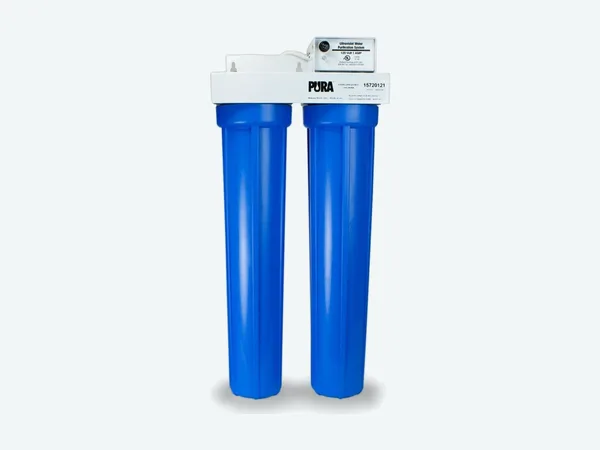
| PURA UV20-2 SD Two-Stage UV System (8–10 gpm) | No listing found | $729 | Not stated | 10 gpm | 3-month cartridge | $143 | Main line, plumber | 3 years | 180 days |
| VIQUA VH410 UV System (18 gpm) | Only the VH410-V version is listed | $829 | Not stated | 18 gpm | Not stated | $158 | Main line, plumber | 10 years | 30 days |
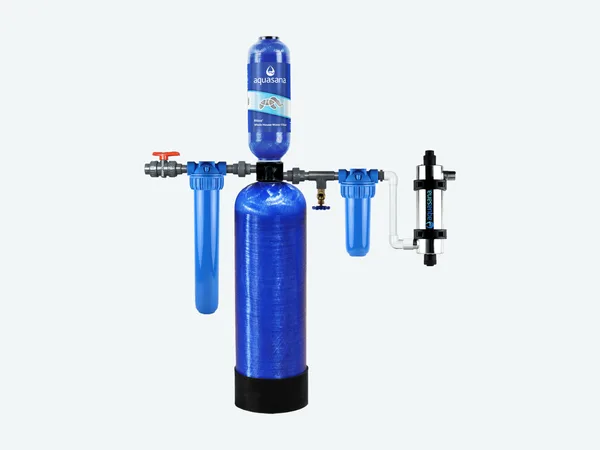
| Aquasana Rhino Well Water with UV | UV stage certified 55 Class B | $3,498 | Not stated | 6 gpm | 500,000 gal claimed | $614 | Main line, plumber | 5 years | 90 days |
We track 6 UV systems. 2 models share the highest score, 9.25/10: VIQUA PRO10 UV System (10 gpm) and US Water Systems Pulsar UV Disinfection System (10 gpm). Our top pick among them is VIQUA PRO10 UV System (10 gpm). None of the 6 has a certifier listing for a health claim. 2 of 6 are listed for UV treatment only (NSF/ANSI 55). The rest carry brand claims we couldn't match to a listing. Prices run $338.99 to $3,498, checked Oct 14, 2026.
Test the water for coliform bacteria first, then choose by NSF/ANSI 55 class. For water that may be contaminated, the VIQUA PRO10 at $3,175 is the only system here listed under Class A, the class meant for that job, and it has the UV sensor and alarm Class A requires. For a well that already tests clean, NSF lists the VIQUA VH410-V under Class B, and Amazon sells its VH410 version for $829. Of the unlisted units, the Pulsar UV-10 at $1,179.95 comes with a 1-micron prefilter and a 10-year reactor warranty, and the iSpring UVF55FS is the lowest price at $338.99. UV does nothing for lead, nitrate or other chemicals. Prices as of October 14, 2026.
Six systems, each fitted on the main line so every tap gets treated water. They split by what your well test shows and by whether a certifier lists them. Prices are the sellers' own, as of October 14, 2026.
For the rest of a well setup, with sediment, iron and smell, see best well water filter systems.
NSF/ANSI 55 is the standard for UV systems, and it has two classes. Water Conditioning & Purification explains them. Class A systems are meant to inactivate bacteria, viruses, Cryptosporidium and Giardia “from water that may be contaminated.” Class B is “supplemental bactericidal treatment” for water “considered to be microbiologically safe and of known quality,” and it is “not intended for the disinfection of microbiologically unsafe water.”
The tests differ too. In NSF's test, a Class A system has to cut a test virus by 3.5 log, about 99.97%, and a Class B system by 2.0 log, or 99%. A Class A system must have a UV sensor connected to an alarm, a shutoff, or both, so you know when it stops performing. Class B needs no sensor. And because the dose falls as water moves faster, the standard requires automatic flow controls and tests each unit at the highest flow it reaches.
On this page, the PRO10 is listed under Class A, and the VH410-V and the Aquasana UV unit under Class B. A listing covers the exact model named in it, which is why the VH410 sold on Amazon doesn't carry it. NSF's NSF/ANSI 55 listing has no entry for the Pulsar, the iSpring or the PURA, and I found none for iSpring or US Water Systems at WQA or IAPMO either, October 14, 2026. Acuva's under-sink LED units hold an IAPMO listing under Class B, but I couldn't confirm a US price, so they aren't compared here. Other filters listed for bacteria and viruses are in NSF certified water filters.
CDC advises testing a private well at least once a year for total coliform bacteria, nitrates, total dissolved solids and pH. A high total coliform count, CDC says, makes it likely that harmful germs, including certain viruses, bacteria and parasites, are in the water too. EPA says high bacteria “can sometimes be controlled” by adding disinfection such as UV light, and says to contact your health department and retest when a result exceeds health standards. Sampling is covered in my guide to well water testing, and lab kits in best water test kits.
The same test tells you whether UV can work at all. Hardness and iron leave deposits on the quartz sleeve around the lamp, and color or cloudiness blocks the light. Every brand that publishes limits asks for water like this going in:
| System | Iron | Manganese | Hardness | Turbidity | Tannins | UVT |
|---|---|---|---|---|---|---|
| VIQUA VH410, PRO10 | 0.3 | 0.05 | 7 gpg | 1 NTU | 0.1 | 75% |
| Pulsar UV-10 | 0.3 | 0.05 | 7 gpg | 1 NTU | 0.1 | 75% (85% advised) |
| Aquasana Rhino UV | 0.3 | 0.05 | 7 gpg | 1 NTU | 0.1 | 75% |
| PURA UV20-2-SD | 0.3 | 0.05 | 7 gpg | 5 NTU | — | — |
| iSpring UVF55FS | — | — | — | — | — | — |
Pulsar ties its warranty to these numbers: its manual says the warranty doesn't apply when the water falls outside them. VIQUA's VH410 manual says water over 7 gpg “should be softened.” Aquasana says its UV unit is “designed for water that has already been filtered through a home filtration system and not as a standalone unit.” If your iron or manganese is over the line, start with an iron filter.
UV dose is measured in millijoules per square centimeter (mJ/cm²), and it falls as flow rises. WC&P puts it plainly: the effectiveness of a UV system “is inversely proportional to flow rate.” So a gpm figure means little without the dose behind it.
Size the system for your peak flow, not the average. Aquasana notes that “most homes use only 2 to 3 GPM the majority of the time,” but two showers and a washer at once take more, and a UV unit running past its rated flow delivers a lower dose than it was rated for. The well pump sets the ceiling: time a 5-gallon bucket at an outside spigot, and if it fills in under a minute you have more than 5 gpm.
NSF/ANSI 55 covers microorganisms only. A UV listing says nothing about lead, nitrate, arsenic, PFAS, iron or taste. VIQUA's PRO10 manual says the Class A system is for “microbiologically contaminated water that meets all other public health standards,” and is “intended to be installed on visually clear water.” For chemicals, the filters in best well water filter systems and best reverse osmosis systems are the next read. The contaminants or other substances removed or reduced by this water treatment device are not necessarily in your water.
Nor does EPA check how well UV units work. In a 2020 compliance advisory, EPA says UV lights sold with claims against bacteria or viruses are regulated as pesticide devices under FIFRA, and that “unlike chemical pesticides, EPA does not routinely review the safety or efficacy of UV light devices.” That leaves the certifier listing as the check to look for.
Smaller UV products are compared elsewhere. Countertop RO units with a UV lamp, such as the iSpring RCD100, are in best countertop RO systems, by their RO listings. iSpring's under-sink RCC7AK-UV ($349.99, October 14, 2026) adds a UV stage after the membrane, and its NSF/ANSI 58 listing covers TDS, not the UV stage. For UV-C bottle caps, see my LARQ review: I found no LARQ listing under NSF/ANSI 55.
A UV lamp is changed by the calendar, not when it goes dark. Most lamps here are rated for 9,000 hours, about a year of running day and night. The PRO10's amalgam lamp is rated for about 18,000 hours. VIQUA's manual warns that without a UV sensor “it is not possible to verify the UV (invisible) output of replacement lamps,” and that visible blue light “does not mean equivalent performance.” On the units without a sensor, a cheap copy lamp gives you no way to tell.
Yearly cost at sellers' prices, October 14, 2026:
Each unit needs a 120-volt outlet near the pipe. VIQUA's PRO10 manual strongly recommends a surge suppressor to protect the controller.
UV goes last on the main line. VIQUA's VH410 manual says “the UV System should be the final piece of treatment equipment” and that “a 5-micron sediment filter must precede” it. On heavy sediment it suggests a 20-micron filter ahead of the 5-micron one. Pulsar's manual also calls for pre-filtration of at least 5 microns. So the usual order is a sediment filter, then an iron filter or softener if the test calls for one, then UV. The Pulsar and PURA come with their prefilter.
Before start-up, VIQUA says the whole plumbing system, pressure and hot water tanks included, must be flushed with household bleach, and that the pipes after the UV unit must be free of bacteria for it to work.
For the first stage, see best sediment water filters. The Aquasana Rhino Well with UV puts the filter tanks and the UV in one package, which is why it's listed here at a whole-system price. How I weigh brand ratings against listings is in how we research.
It depends on your well test. For water that may be contaminated, the VIQUA PRO10 at $3,175 is the only system here listed under NSF/ANSI 55 Class A. For water that already tests clean, NSF lists the VIQUA VH410-V under Class B, and the VH410 sells for $829. The iSpring UVF55FS is the lowest price at $338.99, with no listing. Prices as of October 14, 2026.
Class A is meant for water that may be contaminated and must have a UV sensor with an alarm or shutoff. Class B is supplemental treatment for water already considered microbiologically safe, and is not meant for unsafe water. If your test finds coliform, have the well itself checked first, and pick a Class A unit.
No. NSF/ANSI 55 covers microorganisms only, and VIQUA's Class A manual says the system is for water that “meets all other public health standards.” For lead, nitrate or PFAS, look at reverse osmosis or a filter listed under NSF/ANSI 53 or 58 for that substance.
Once a year for most units here, at 9,000 hours. The VIQUA PRO10's amalgam lamp is rated for about 18,000 hours, or up to 2 years. Lamps cost $79.99 to $310 at the sellers' prices on 2026-10-14, and the quartz sleeve needs cleaning too.
Yes. VIQUA says a 5-micron sediment filter must come before its UV systems, and Pulsar calls for at least 5 microns. Brands also ask for iron under 0.3 ppm, manganese under 0.05 ppm and hardness under 7 gpg, so a well with more needs an iron filter or softener ahead of the UV.
Every UV system gets 1.5 to 2 points on each of 5 criteria: Certification, published specs, cost of ownership, warranty and returns and owner reviews. The score out of 10 is the sum, from 7.5 to 10. Owner reviews not summarized yet, so every model gets 1.75 of 2 points there for now. Prices were checked Oct 14, 2026. Read the full method.