9.25/10
US Water Systems
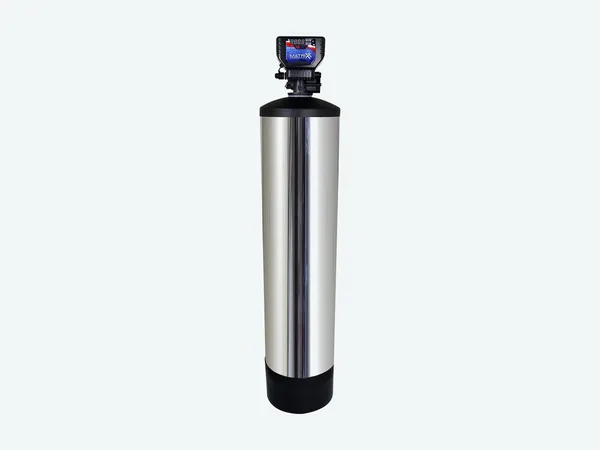
Matrixx Backwashing Sediment Filter (8 GPM)
$1,335.50uswatersystems.com
No listing found 8 gpm$0/yr cartridgesLifetime warranty
 Under-sink filters32 models · from $58.9929 certified for health claims
 Reverse osmosis20 models · from $162.2312 certified for health claims
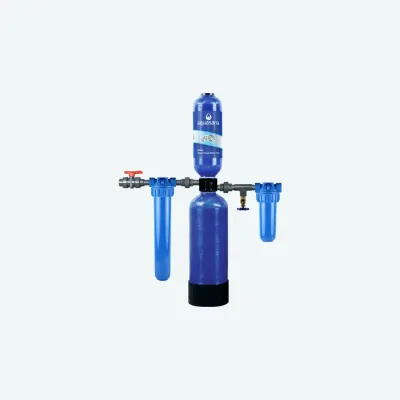 Whole-house systems12 models · from $2583 certified for health claims
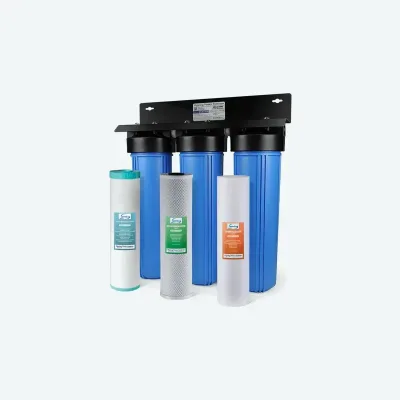 Well water systems4 models · from $535.990 certified for health claims
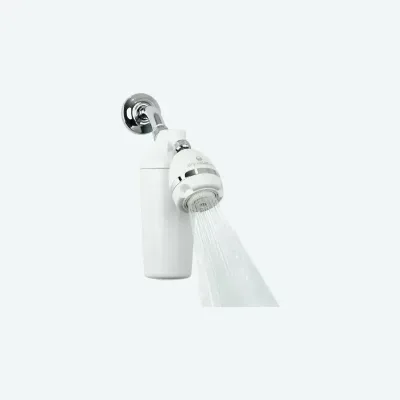 Shower filters15 models · from $29.950 certified for health claims
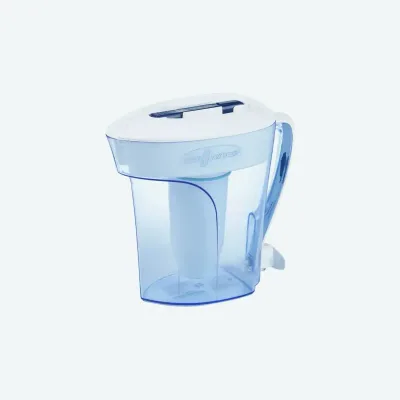 Pitchers14 models · from $22.997 certified for health claims
 Countertop filters7 models · from $79.995 certified for health claims
 Countertop RO systems9 models · from $2194 certified for health claims
 Gravity filters18 models · from $95.957 certified for health claims
 Faucet filters6 models · from $27.495 certified for health claims All water filtersBrowse 137 →
6 sediment water filters compared on listings, flow, cost per year and warranty. Our top pick is the US Water Systems Matrixx Backwashing Sediment Filter (8 GPM). Read the full summary ↓
 By Daryna Klochko · Published · Prices checked Oct 14, 2026
| Model | Certification | Price | Certified to reduce | Flow | Cost per year | Install | Warranty | Returns |
|---|---|---|---|---|---|---|---|---|
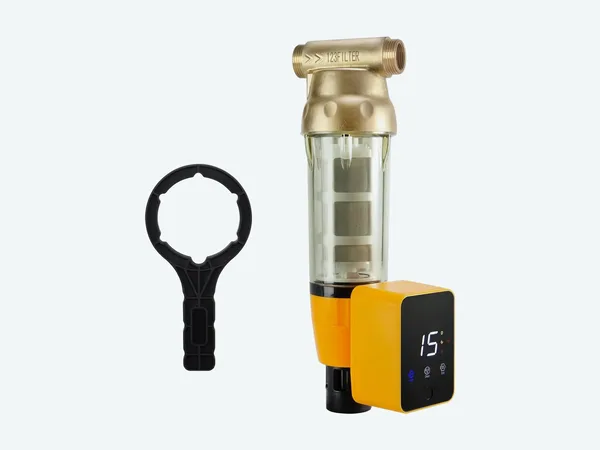
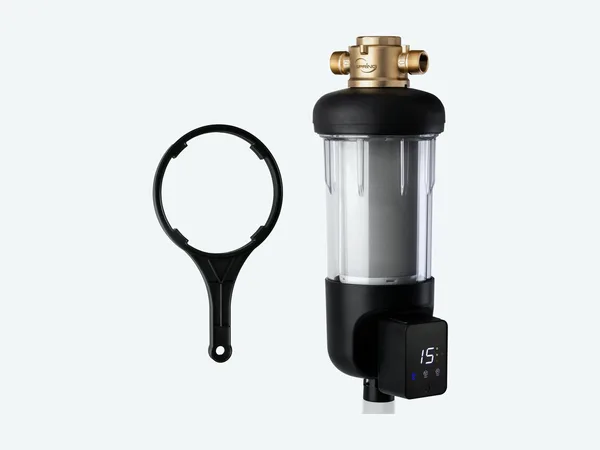
| US Water Systems Matrixx Backwashing Sediment Filter (8 GPM) | No listing found | $1,335.50 | Not stated | 8 gpm | $0 | Main line, plumber | Lifetime | 60 days |
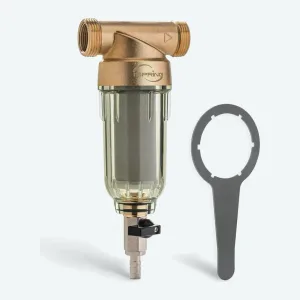
| iSpring WSP-50 Spin-Down Sediment Filter | No listing found | $69.99 | Not stated | 20 gpm | $27 | Main line, plumber | 1 year | 30 days |
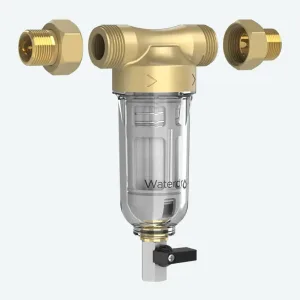
| Waterdrop WD-RPFK Spin-Down Sediment Filter | No listing found | $69.99 | Not stated | 20 gpm | Not stated | Main line, plumber | 1 year | 30 days |
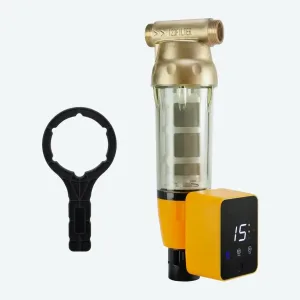
| iSpring WSP50ARB Auto-Flush Spin-Down Filter | No listing found | $252.99 | Not stated | 25 gpm | Not stated | Main line, plumber | 1 year | 30 days |
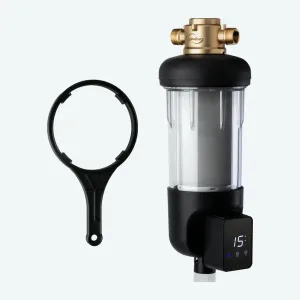
| iSpring WSP50ARJ Jumbo Auto-Flush Spin-Down Filter | No listing found | $397.99 | Not stated | 25 gpm | Not stated | Main line, plumber | 1 year | 30 days |
| SoftPro Spin-Down Sediment Filter & Sand Separator | No listing found | $95 | Not stated | Not stated | Not stated | Main line, plumber | Not stated | 60 days |
We track 6 sediment filters. US Water Systems Matrixx Backwashing Sediment Filter (8 GPM) has the highest score, 9.25/10. None of the 6 has a certifier listing for a health claim. What they reduce is the brand's own claim. Prices run $69.99 to $1,335.50, checked Oct 14, 2026.
For sand from a well, the best sediment filter on my six checks is a spin-down screen: the iSpring WSP-50 is $69.99 at iSpring on October 14, 2026, takes a reusable stainless steel screen from 50 to 1000 micron, and runs about $27 a year in screens. The Waterdrop WD-RPFK costs the same and mounts sideways. For fine silt and cloudy water, the US Water Systems Matrixx backwashing tank scores highest here, 9.25, with no cartridges and a lifetime tank warranty, at $1,335.50. None of the six is listed by a certifier for particulate reduction, and no sediment filter does anything for dissolved iron or hardness.
A sediment filter is the first thing on the main water line. It catches sand, grit, rust flakes and silt before they reach faucets, the water heater, a softener or an RO membrane. I compared six whole-house sediment filters from four brands on October 14, 2026: two hand-flushed spin-downs, a centrifugal sand separator, two auto-flushing spin-downs and a backwashing media tank. I checked each against the NSF listings, the brand's own specifications and store prices. I found no independent test of these filters with published numbers, so every figure below is the brand's or the store's.
This page covers particles only. Orange stains, black specks from manganese or a rotten-egg smell are dissolved in the water and pass through any screen: see iron filters for well water. For a whole well setup with bacteria and UV, see well water filters.
Three designs do the job, and many homes use two of them in a row.
| Type | What it catches | Upkeep | Price here |
|---|---|---|---|
| Spin-down screen | Sand and grit; screens of 50 micron and up | Open the bottom valve to flush; screen lasts 1 to 2 years by iSpring's figure | $69.99 to $397.99 |
| Cartridge housing | Finer silt with a pleated or spun cartridge, down to 5 micron | A new cartridge every few months; iSpring suggests every 6 months for its big blue housings | $41.99 to $72.99 for an iSpring housing |
| Backwashing media tank | Silt down to 5 micron nominal by the brand's figure | Flushes itself to a drain; no cartridges | $1,335.50 for 8 gpm |
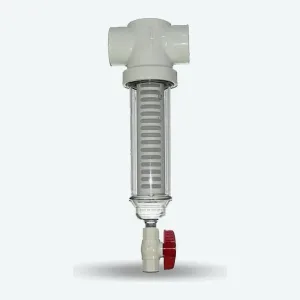
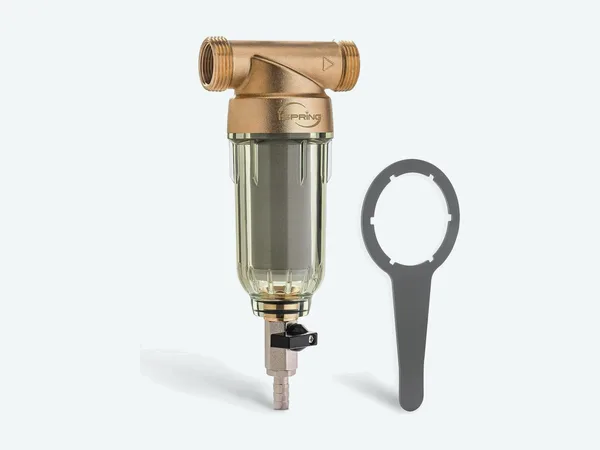
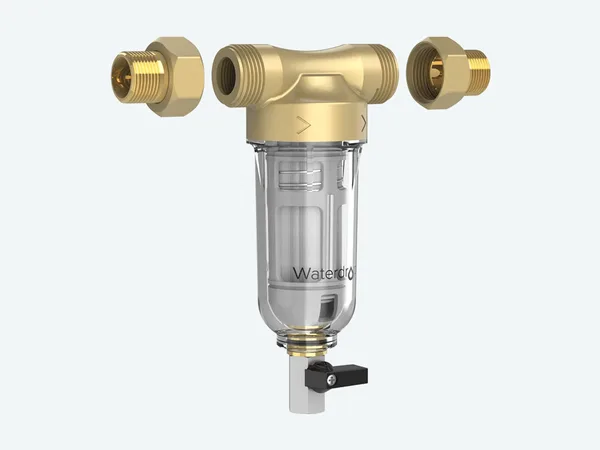
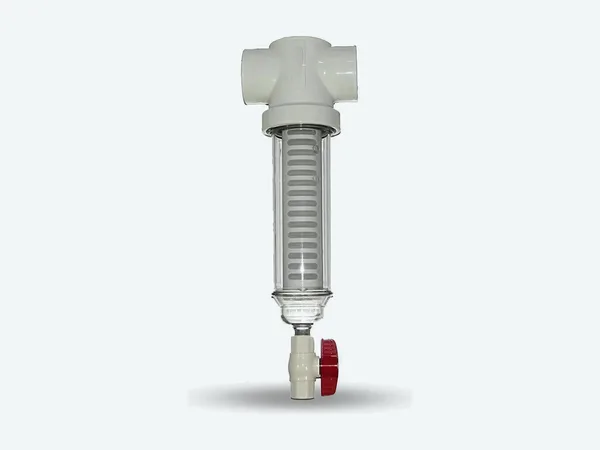
Spin-down. Water enters a clear bowl and passes through a cylinder of stainless steel mesh. Heavy grains drop to the bottom, where a valve lets you flush them out without shutting off the water. The screen is rinsed and reused. The WSP-50 and WD-RPFK are flushed by hand. The SoftPro sand separator adds a centrifugal head that spins sand down before it reaches its 60-mesh screen, so the screen clogs less. SoftPro gives no micron figure, flow rate or warranty for it, which is why it scores lowest here, 8.25.
Auto-flush. The WSP50ARB and WSP50ARJ add a motorized valve with a touch screen that flushes on a schedule, and iSpring rates both at up to 25 gpm. They need power for the module and a drain or bucket under the valve. The ARJ's bowl holds about a gallon, which iSpring calls 22 times larger than a standard sediment filter: fewer flushes on a well that sends a lot of sand.
Cartridge. A big blue housing takes a 4.5-inch-wide cartridge rated in microns. On October 14, 2026 iSpring sold the 10-inch HB18B housing for $64.99 and the 20-inch HB28B for $72.99, both with 1-inch ports, and a 10-inch clear housing with a 5-micron cartridge (HC16FP15X1) for $41.99. Cartridges catch finer particles than a screen, but they are thrown away when full, and sand fills them fast. That is why a spin-down usually goes in front of one.
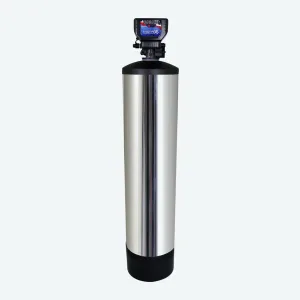
Backwashing tank. The Matrixx holds zeolite media in a 10-by-54-inch tank. Particles lodge in the media bed, and a backwash flushes them to the drain at 7 gpm. US Water Systems rates it to 5 micron nominal, gives a lifetime warranty on the tank and 10 years on the valve electronics, and puts its electricity at under $2 a year. It needs a drain, an outlet and a well that keeps up with the backwash flow. On October 14, 2026 larger sizes ran up to $1,695.50 for 20 gpm.
A micron is a thousandth of a millimeter. The lower the number, the finer the particle a filter stops and the faster it fills. University of Georgia Extension puts sand at 50 micron to 2 millimeters and clay at 0.2 to 2 micron, too fine for the usual sediment cartridge. That is the practical split: a 50-micron screen stops well sand, and cloudiness from clay or fine silt goes right through it.
iSpring warns that its 50 and 100 micron screens clog quickly when there is a lot of sediment. In very sandy water, start with a coarser screen and add a finer stage after it rather than flushing a fine screen every day.
A sediment filter does nothing for what is dissolved. UGA Extension notes that mechanical filters catch sand, silt and clay but not dissolved chemicals. Iron that only turns orange after it meets the air, hardness that leaves white scale, nitrate and bacteria all pass through. Waterdrop says the same of its own filter: it does not change total dissolved solids. For hardness, see filters for hard water.
The NSF/ANSI 42 standard covers particulate reduction as well as chlorine taste and odor. Performance data sheets show it as a particulate class by particle size, from Class I (0.5 to under 1 micron) to Class VI (50 to 80 micron), as on PUR's pitcher data sheet. I searched the NSF listings for each brand on October 14, 2026. iSpring and Waterdrop had no NSF/ANSI 42 listing, and the same day I found no NSF, WQA or IAPMO listing for US Water Systems or SoftPro. None of the six is listed for sediment.
Two claims on brand pages need a closer look:
With no listings to separate them, the scores rest on published specifications, yearly cost, warranty and returns. That is why the Matrixx, with a lifetime tank warranty and no cartridges, leads at 9.25, and four of the five screen filters tie at 8.75.
A sediment filter goes on the main line where water enters the house, ahead of everything else: a softener, an iron filter, a UV water filter and any whole-house carbon filter. On a well that usually means right after the pressure tank. The iSpring spin-downs have 1-inch male and 3/4-inch female threads, so they fit either pipe size. SoftPro sells 3/4-inch and 1-inch versions.
If sand appears suddenly in a well that never had it, it can point to a problem with the pump or the well itself. A sediment filter catches the sand, but the cause is worth a call to a well contractor. A well water test shows whether stains come from particles or from dissolved iron and manganese.
A spin-down screen is rinsed and reused, so the running cost is a new screen when the mesh wears or tears. Only iSpring gives an interval for its basic screen, 1 to 2 years, and I priced a year at the shorter end.
| Model | Price | Replacement | Per year |
|---|---|---|---|
| iSpring WSP-50 | $69.99 | $26.99 replacement screen every 1–2 years | $27 |
| Waterdrop WD-RPFK | $69.99 | No replacement screen in Waterdrop's store on October 14, 2026 | Not calculated |
| SoftPro sand separator | $95 | No replacement screen in SoftPro's store on October 14, 2026 | Not calculated |
| iSpring WSP50ARB | $252.99 | $45.99 replacement screen; iSpring gives no interval | Not calculated |
| iSpring WSP50ARJ | $397.99 | $87.99 replacement screen; iSpring gives no interval | Not calculated |
| US Water Systems Matrixx | $1,335.50 | No cartridges; media replacement interval not published; under $2 a year in electricity (brand figure) | $0 in cartridges |
A cartridge housing costs less up front but more to run: iSpring suggests a new big blue cartridge every 6 months. Warranties are 1 year on the iSpring and Waterdrop filters, and SoftPro states none for this model. iSpring and Waterdrop take returns for 30 days, SoftPro and US Water Systems for 60. US Water Systems charges a restocking fee of up to 40% on returns.
For well sand, a 50 to 100 micron spin-down screen. Sand starts at about 50 micron by UGA Extension's figure. If the water is very sandy, start coarser, 100 to 200 micron, and add a finer stage after it. iSpring warns its 50 and 100 micron screens clog fast under heavy sediment. For fine silt, add a 5 to 20 micron cartridge or a backwashing tank after the screen.
On a well that sends sand or grit, yes. It goes first in line, so particles reach neither the softener's valve nor an iron filter or RO membrane. A spin-down like the iSpring WSP-50 costs $69.99 on October 14, 2026. On town water that runs clear, many homes skip it.
Only iron that is already rust, as flakes or particles. Dissolved iron, the kind that comes out clear and stains orange later, passes through any screen. For that, see iron filters for well water.
For sand, a spin-down: it is flushed and reused, and sand would fill a cartridge in days. For fine silt and cloudiness, a cartridge or a backwashing tank, since a 50-micron screen lets clay and fine silt through. Many wells use both, the spin-down first.
Every filter gets 1.5 to 2 points on each of 5 criteria: Certification, published specs, cost of ownership, warranty and returns and owner reviews. The score out of 10 is the sum, from 7.5 to 10. Owner reviews not summarized yet, so every model gets 1.75 of 2 points there for now. Prices were checked Oct 14, 2026. Read the full method.