9.25/10
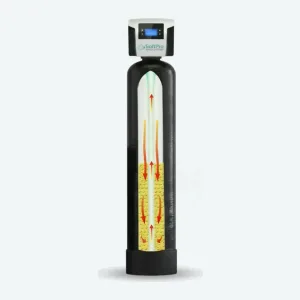
$1,517softprowatersystems.com
No listing found 5 gpm$0/yr cartridgesLifetime warranty
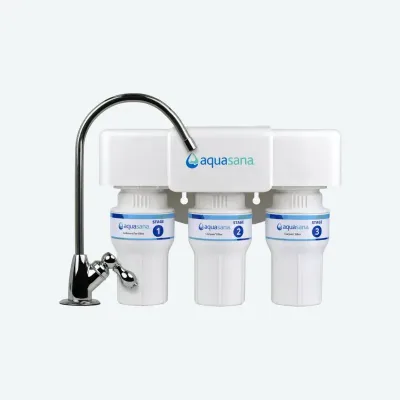 Under-sink filters32 models · from $58.9929 certified for health claims
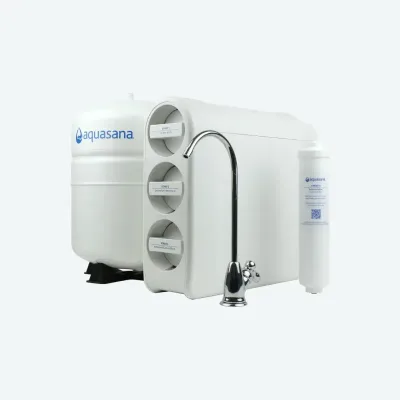 Reverse osmosis20 models · from $162.2312 certified for health claims
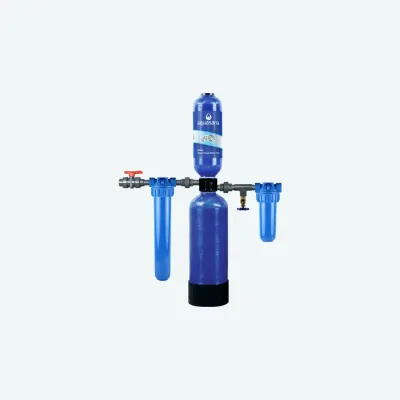 Whole-house systems12 models · from $2583 certified for health claims
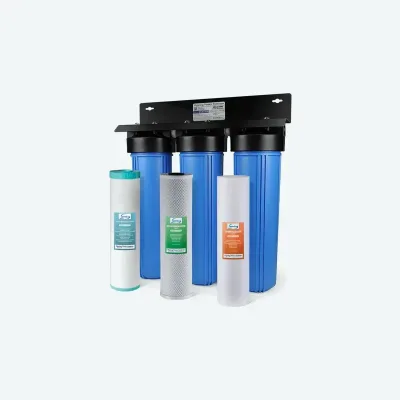 Well water systems4 models · from $535.990 certified for health claims
 Shower filters15 models · from $29.950 certified for health claims
 Pitchers14 models · from $22.997 certified for health claims
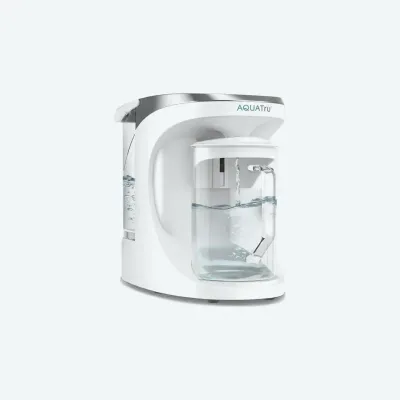 Countertop filters7 models · from $79.995 certified for health claims
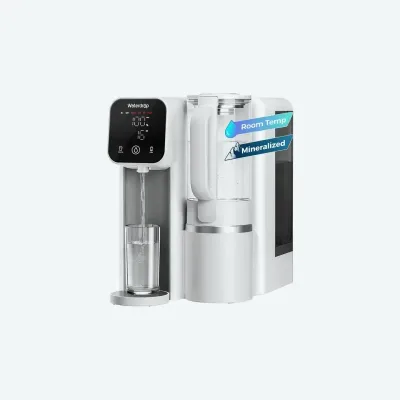 Countertop RO systems9 models · from $2194 certified for health claims
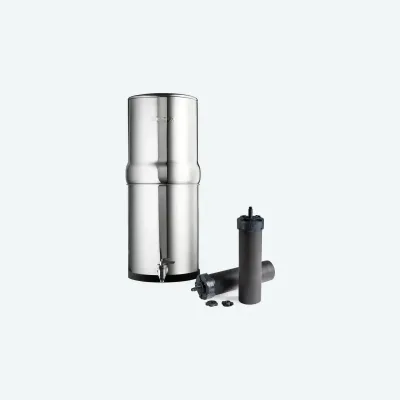 Gravity filters18 models · from $95.957 certified for health claims
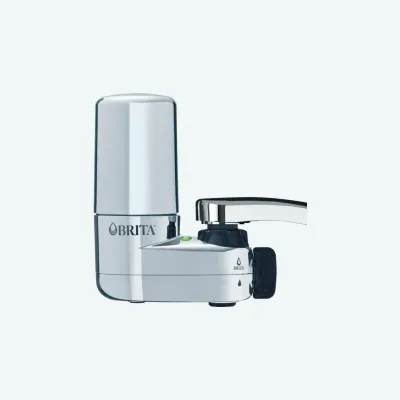 Faucet filters6 models · from $27.495 certified for health claims All water filtersBrowse 137 →
7 iron filters for well water compared on listings, flow, cost per year and warranty. Our top pick is the SoftPro AIO Iron Master Air Injection Iron Filter (1.0 cu ft). Read the full summary ↓
 By Daryna Klochko · Published · Prices checked Oct 13 to Oct 14, 2026
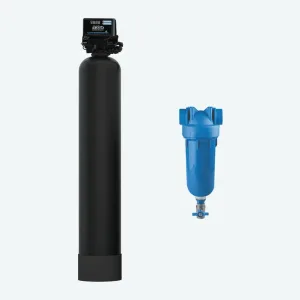
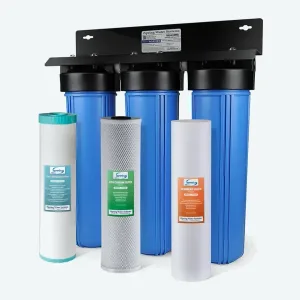
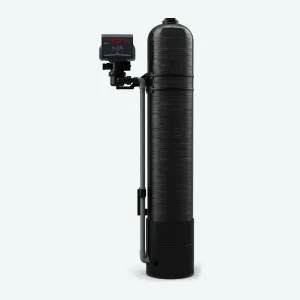
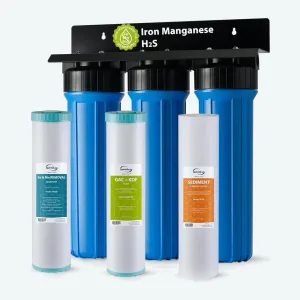
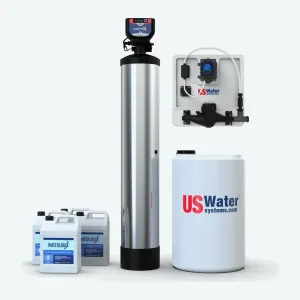
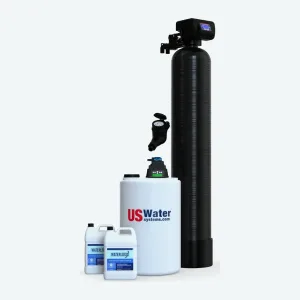
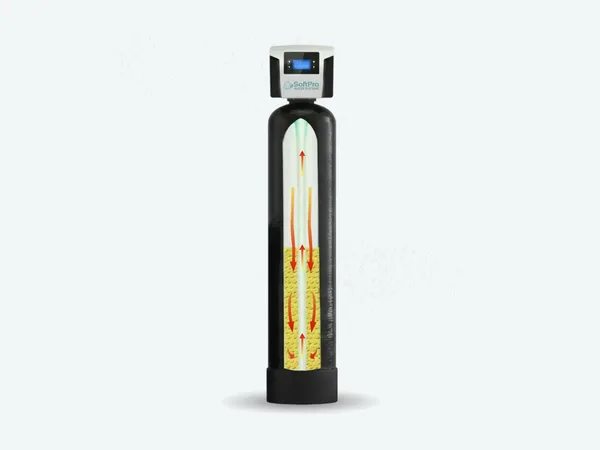
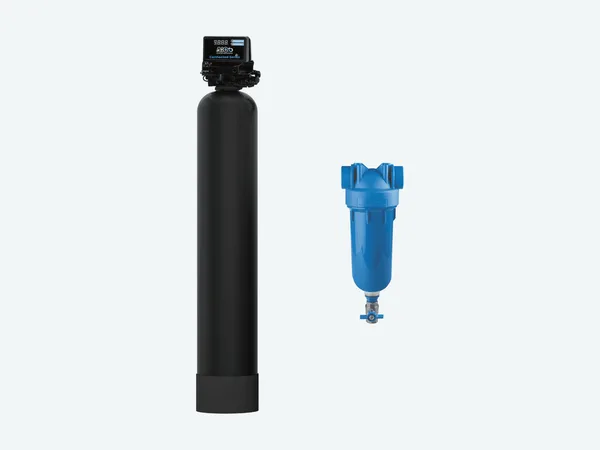
| Model | Certification | Price | Certified to reduce | Flow | Cartridge life | Cost per year | Install | Warranty | Returns |
|---|---|---|---|---|---|---|---|---|---|
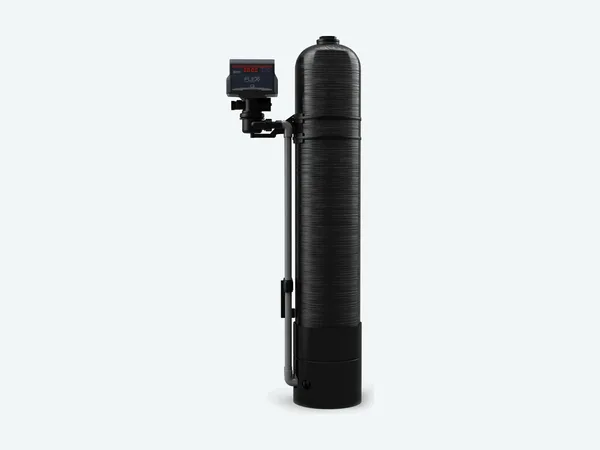
| SoftPro AIO Iron Master Air Injection Iron Filter (1.0 cu ft) | No listing found | $1,517 | Not stated | 5 gpm | Not stated | $0 | Main line, plumber | Limited lifetime | 60 days |
| SpringWell Whole House Well Water Filter System (WS1) | No listing found | $2,365.50 | Not stated | 12 gpm | Not stated | $0 | Main line, plumber | Limited lifetime | 180 days |
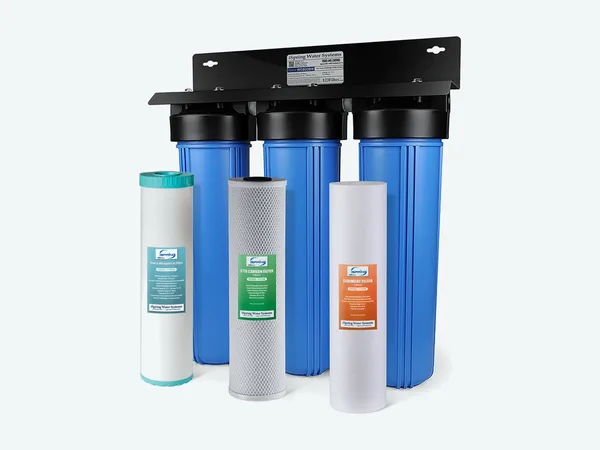
| iSpring WGB32BM 3-Stage Whole House Filter | No listing found | $535.99 | Brand claims only | 15 gpm | 50,000 gal claimed | $320 | Main line, plumber | 1 year | 30 days |
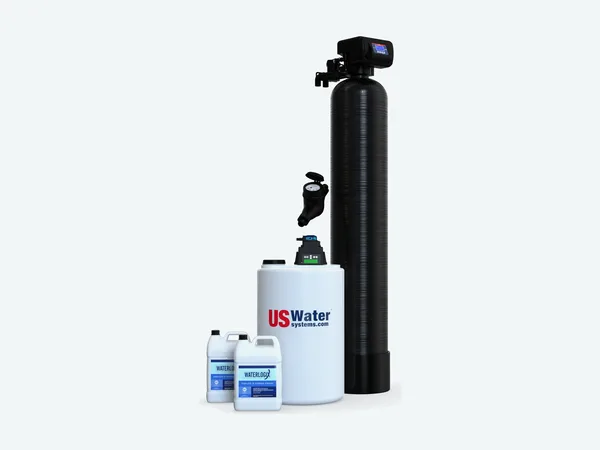
| US Water Systems Flexx Oxi-Gen Aeration Iron and Sulfur Filter (10 GPM) | No listing found | $2,695 | Not stated | 10 gpm | Not stated | $0 | Main line, plumber | 10 years | 60 days |
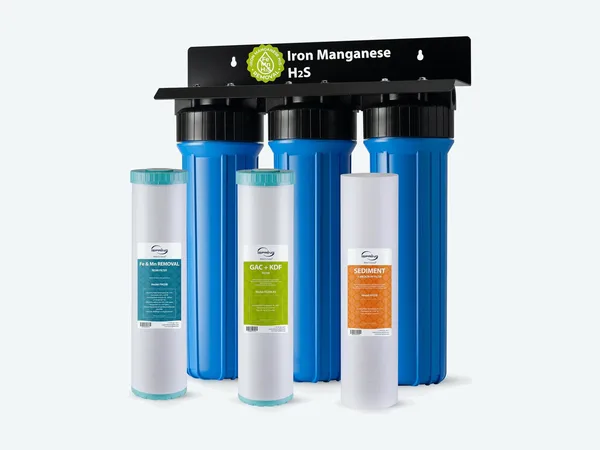
| iSpring WGB32B-MKS 3-Stage Whole House Filter | No listing found | $608.99 | Brand claims only | 15 gpm | 50,000 gal claimed | $420 | Main line, plumber | 1 year | 30 days |
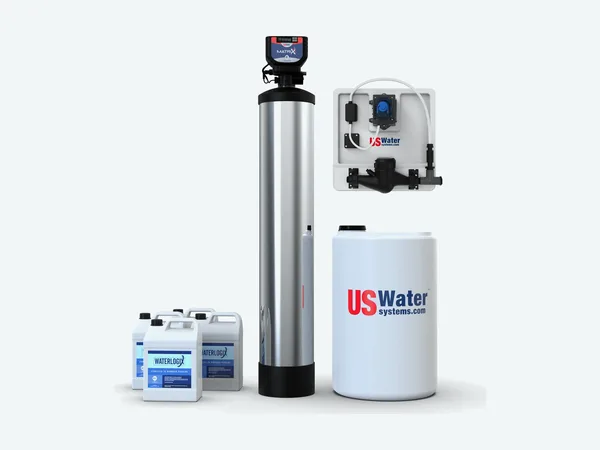
| US Water Systems Matrixx InFusion Iron and Sulfur System (10 GPM) | No listing found | $3,294.95 | Not stated | 10 gpm | Not stated | Not stated | Main line, plumber | Lifetime | 60 days |
| US Water Systems Flexx InFusion Iron and Sulfur System (10 GPM) | No listing found | $2,595 | Not stated | 10 gpm | Not stated | Not stated | Main line, plumber | 5 years | 60 days |
We track 7 iron filters. 2 models share the highest score, 9.25/10: SoftPro AIO Iron Master Air Injection Iron Filter (1.0 cu ft) and SpringWell Whole House Well Water Filter System (WS1). Our top pick among them is SoftPro AIO Iron Master Air Injection Iron Filter (1.0 cu ft). None of the 7 has a certifier listing for a health claim. What they reduce is the brand's own claim. Prices run $535.99 to $3,294.95, checked Oct 13 to Oct 14, 2026.
Test the well first, then match the iron filter to three numbers: iron, hydrogen sulfide and pH. For iron above 3 ppm, the SoftPro AIO Iron Master at $1,517 is the lowest-priced tank system here: air injection, no chemicals, rated by SoftPro for up to 30 ppm iron. For a strong rotten-egg smell, US Water Systems rates its peroxide-fed Flexx InFusion for 15 ppm hydrogen sulfide. For iron above 10 ppm or iron bacteria, its Matrixx InFusion is the only one rated for both. Under 3 ppm with no drain nearby, the iSpring WGB32BM at $535.99 uses cartridges. Every limit on this page is the brand's own: no certifier lists any of these seven for iron. Prices as of October 13 to October 14, 2026.
Seven systems from four brands, all fitted on the main line so every tap gets treated water. They split by what the well test shows. Prices are the brands' own for the smallest size of each, as of October 13 to October 14, 2026.
iSpring also sells an air-injection tank, the WCFM400K, at $1,417.99 with a 1-year warranty. Its page gave no iron or manganese limit when I checked on October 14, 2026, so it isn't in the comparison. For a whole well setup, with bacteria and UV, see best well water filter systems.
Iron, hydrogen sulfide and pH decide the system. Manganese and the well's flow come next. EPA ties stained fixtures and laundry to iron, copper and manganese, and an objectionable taste or smell to hydrogen sulfide, corrosion and metals. A lab water test gives you all of them in one report, and sampling is covered in my guide to well water testing.
| System | How it works | Iron | Hydrogen sulfide | Manganese | pH | Price |
|---|---|---|---|---|---|---|
| SoftPro AIO Iron Master Air Injection Iron Filter (1.0 cu ft) | Air injection, Katalox Light | 30 ppm | — | — | — | $1,517 |
| US Water Systems Matrixx InFusion Iron and Sulfur System (10 GPM) | Hydrogen peroxide, catalytic carbon | 20 ppm | 30 ppm | 1 ppm | 6–9 | $3,294.95 |
| US Water Systems Flexx InFusion Iron and Sulfur System (10 GPM) | Hydrogen peroxide, catalytic carbon | 10 ppm | 15 ppm | 0.5 ppm | 6.5–8.5 | $2,595 |
| US Water Systems Flexx Oxi-Gen Aeration Iron and Sulfur Filter (10 GPM) | Air injection, Katalox and catalytic carbon | 8 ppm | 6 ppm | 0.5 ppm | 6–9 | $2,695 |
| SpringWell Whole House Well Water Filter System (WS1) | Air injection | 7 ppm | 8 ppm | 1 ppm | — | $2,365.50 |
| iSpring WGB32BM 3-Stage Whole House Filter | Three cartridges | 3 ppm | — | 1 ppm | — | $535.99 |
| iSpring WGB32B-MKS 3-Stage Whole House Filter | Three cartridges, KDF and carbon | 3 ppm | — | 1 ppm | — | $608.99 |
Read the limits as ceilings the makers set for their own media, not as results for your water. None of the brands says how it measured them. The contaminants or other substances removed or reduced by this water treatment device are not necessarily in your water.
EPA sets secondary standards of 0.3 mg/L for iron and 0.05 mg/L for manganese. They're non-enforceable guidelines for color, staining and taste, not health limits. One mg/L is the same as one ppm. Manganese also has a health advisory: Penn State Extension cites EPA's 0.3 mg/L level, set over concerns about neurological effects from regularly drinking water above it.
Iron comes in two forms. Dissolved, or reduced, iron leaves the tap clear, and Penn State says orange-brown stains or particles “quickly appear as the water is exposed to oxygen.” Oxidized iron is rusty when it comes out. Penn State says dissolved iron and manganese “are most common in groundwater with a pH less than 7.” Every tank on this page works on the same idea: turn dissolved iron into particles, trap them, then flush them out.
Penn State Extension sets out the usual treatments and the iron levels each one suits:
Penn State puts aeration and catalytic carbon among the less common methods that “may also be effective,” and advises that you “obtain a written guarantee of their effectiveness.” US Water Systems offers a 1-year money-back guarantee only on systems its own water specialists sized from your test. Its standard return is 60 days, unopened, less shipping, with a restocking fee of up to 40%.
The smell is hydrogen sulfide gas. Penn State says it forms through sulfur-reducing bacteria in groundwater, and that “most people can detect hydrogen sulfide levels well below 0.5 mg/L.” It adds that the bacteria “do not cause human health concerns.”
Run the hot and cold taps separately before buying anything. If only the hot water smells, the water heater may be the source. Water heaters carry a magnesium rod against corrosion, and Penn State says the odor “can often be simply treated by removing the magnesium rod.” It adds that removal could shorten the heater's life and “will likely void the manufacturer's warranty.” A softener can also start the smell in rare cases, by giving sulfur-reducing bacteria a place to grow.
If both taps smell, the level points to the method. Penn State says activated carbon “may be effective” below about 1.0 mg/L, catalytic carbon handles “much higher” levels, and chlorination is most often used above 6.0 mg/L. It calls hydrogen peroxide “an excellent oxidant for hydrogen sulfide,” though its use in private systems “has been limited.” Among the brand ratings, the air-injection tanks top out at 8 ppm (SpringWell) and 6 ppm (Flexx Oxi-Gen), and the peroxide systems at 15 and 30 ppm.
Iron bacteria leave a “sticky rusty, yellow, brown, or grey slime,” says the Minnesota Department of Health. They “are not known to cause disease,” but they “can create conditions where other disease-causing organisms may grow,” so MDH advises testing for nitrate and coliform bacteria. The fix starts in the well: MDH says to “contact a licensed well contractor to disinfect your well.”
They change the filter choice too. US Water Systems lists the Flexx Oxi-Gen as not for iron or sulfur bacteria and rates only the Matrixx InFusion for them. SoftPro, SpringWell and iSpring give no bacteria rating. If your test finds coliform, the UV systems in best well water filter systems are the next read.
On a well that needs more than one system, the iron filter goes ahead of the others. A UV lamp can't do its job through rusty water: Aquasana's well UV system page asks for iron under 0.3 ppm and manganese under 0.05 ppm, the same as EPA's secondary levels. A softener takes only a little dissolved iron, under 5 mg/L by Penn State's guidance, so on higher iron it belongs after the iron filter, not in place of it.
Air needs a partner too. Penn State says that after aeration “the water should also be disinfected to keep bacteria from colonizing the aerator.” None of the three air-injection tanks here includes a disinfection stage. If your well test finds coliform bacteria, plan the UV or chlorination as part of the same install rather than adding it later, and size both for the same flow. I compare UV systems by NSF/ANSI 55 class on their own page.
Every tank here cleans itself with a backwash, water run backward through the media to the drain, and that takes flow from the well. SoftPro sizes the Iron Master by it: the 1.0 cu ft tank needs at least 5 gpm, the 1.5 cu ft ($1,757) 7 gpm and the 2.0 cu ft ($1,897) 10 gpm, at SoftPro's prices on 2026-10-14. US Water Systems lists 5 gpm of backwash flow for its 10 GPM models. To check your pump, time a 5-gallon bucket at an outside spigot: if it fills in under a minute, you have more than 5 gpm. Each tank also needs a drain and a power outlet near the main line, and the peroxide systems add a pump and a 15-gallon solution tank on the floor. On a well that sends sand or grit, the iron filter also gets a sediment filter ahead of it; US Water Systems offers its Magna pre-filter as an add-on on the Oxi-Gen and Matrixx InFusion pages.
What each design costs to keep running, on brand prices checked October 13 to October 14, 2026:
On water under 3 ppm iron that suits both, the WGB32BM's cartridges make up the $981 price gap to the SoftPro in about 3 years at prices checked October 13 to October 14, 2026, if you have the drain, outlet and well flow for a tank.
Iron and manganese reduction has a test. Water Conditioning & Purification notes that NSF/ANSI 42 “includes test protocols and criteria for verifying the effectiveness of iron and manganese treatment systems.” None of the seven systems here had such a listing at NSF, WQA or IAPMO when I checked, October 13 to October 14, 2026.
What the brands cite is something else. US Water Systems says the Katalox media in the Flexx Oxi-Gen is “tested and certified by the WQA to NSF/ANSI 61,” a standard for materials that touch drinking water, not for what a system takes out. SoftPro's page says “NSF / WQA / ANSI Certified” with no standard or listing number, and I found none under its name. How I weigh brand claims against listings is in how we research.
It depends on your test. For iron above 3 ppm, the SoftPro AIO Iron Master at $1,517 is the lowest-priced air-injection tank here, rated by SoftPro for 30 ppm. For iron above 10 ppm or iron bacteria, US Water Systems rates its Matrixx InFusion for 20 ppm and both bacteria types. Under 3 ppm, iSpring's WGB32BM cartridge system costs $535.99. All limits are the brands' own, and prices were checked October 13 to October 14, 2026.
EPA's secondary standard for iron is 0.3 mg/L (0.3 ppm), set for staining and taste rather than health. Manganese has a 0.05 mg/L secondary standard and a 0.3 mg/L health advisory. Penn State says iron leaves orange or brown stains in sinks and laundry, and manganese a dense black one.
Only in a narrow range. Penn State recommends a softener for iron when pH is above 6.7, hardness is 3 to 20 grains per gallon and dissolved iron is under 5 mg/L. Outside that range, Penn State points to oxidizing filters and chemical treatment.
Hydrogen sulfide, a gas that sulfur-reducing bacteria produce in groundwater. If only the hot water smells, the water heater's magnesium rod is the usual cause, not the well. If both taps smell, an air-injection tank or a peroxide system handles it, depending on the level your test finds.
The tank systems do: each backwashes to a drain and runs an electric valve, and the peroxide systems also run a pump. Cartridge systems such as the iSpring WGB32BM need neither, but they're rated only for iron up to 3 ppm and the cartridges cost about $320 a year at iSpring's prices on 2026-10-14.
Every iron filter gets 1.5 to 2 points on each of 5 criteria: Certification, published specs, cost of ownership, warranty and returns and owner reviews. The score out of 10 is the sum, from 7.5 to 10. Owner reviews not summarized yet, so every model gets 1.75 of 2 points there for now. Prices were checked Oct 13 to Oct 14, 2026. Read the full method.